I’m Joshua Sortino, a Miami + NYC-based Design Director, advisor, and investor. I will improve your startup’s user experience, design culture, and team. We should talk →
A professional trading terminal for NFTs
Founding Designer · 2022 – Present
- ▲$10B+in total trading volume
- ▲80%+of NFT volume at peak
- ▲#1marketplace — flipped OpenSea
Speed of information as the product
Every NFT marketplace was built like a gallery; with big images, slow pages, and consumer design. Pro traders don’t shop that way. They read floors, depth, and order books, and they act in seconds. Blur reframed the marketplace as a trading terminal: with real-time data, dense layouts, and zero fees. As a result, Blur dominated the entire NFT market as I led design across every surface of the product.
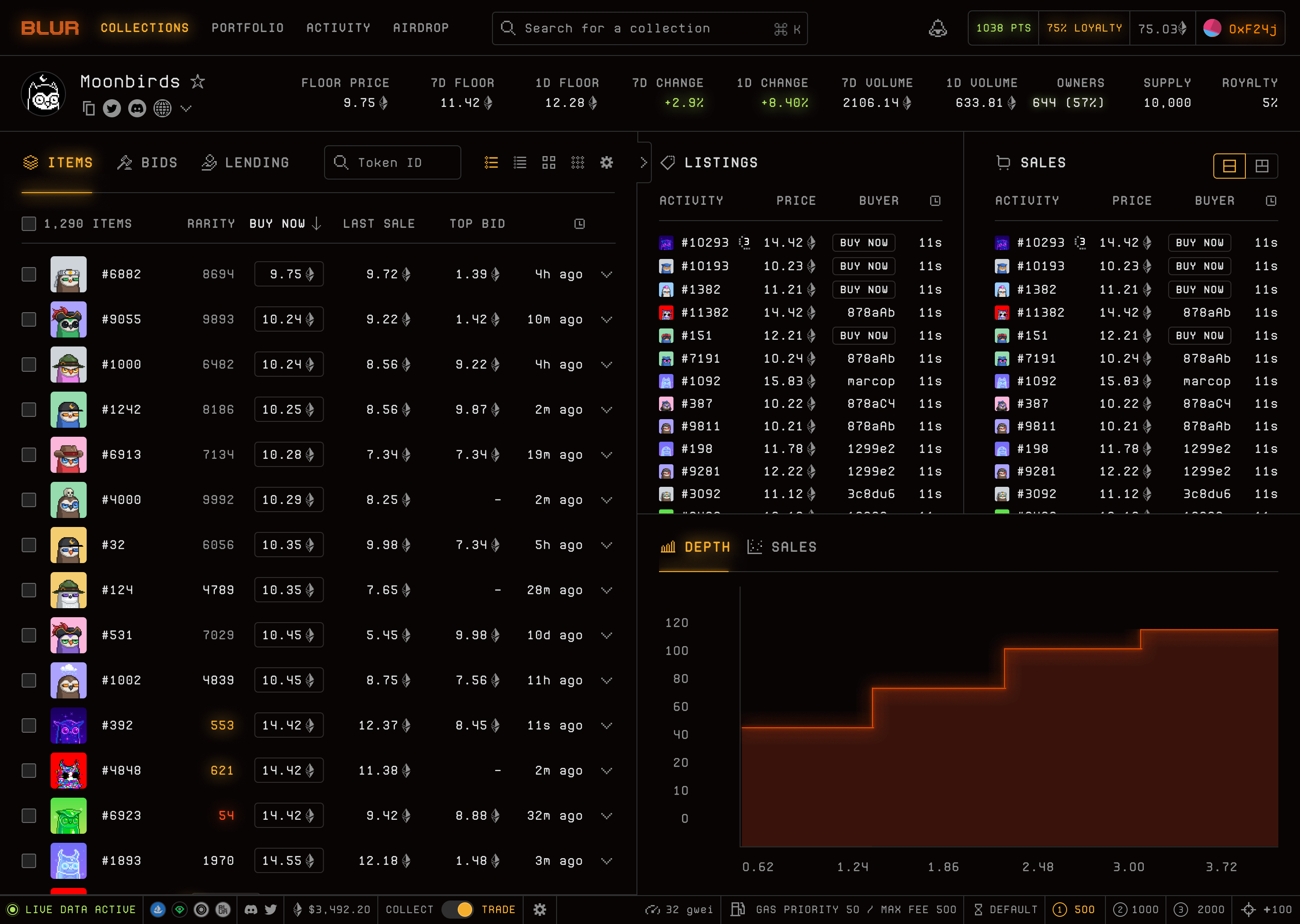
Everything about a collection on one screen
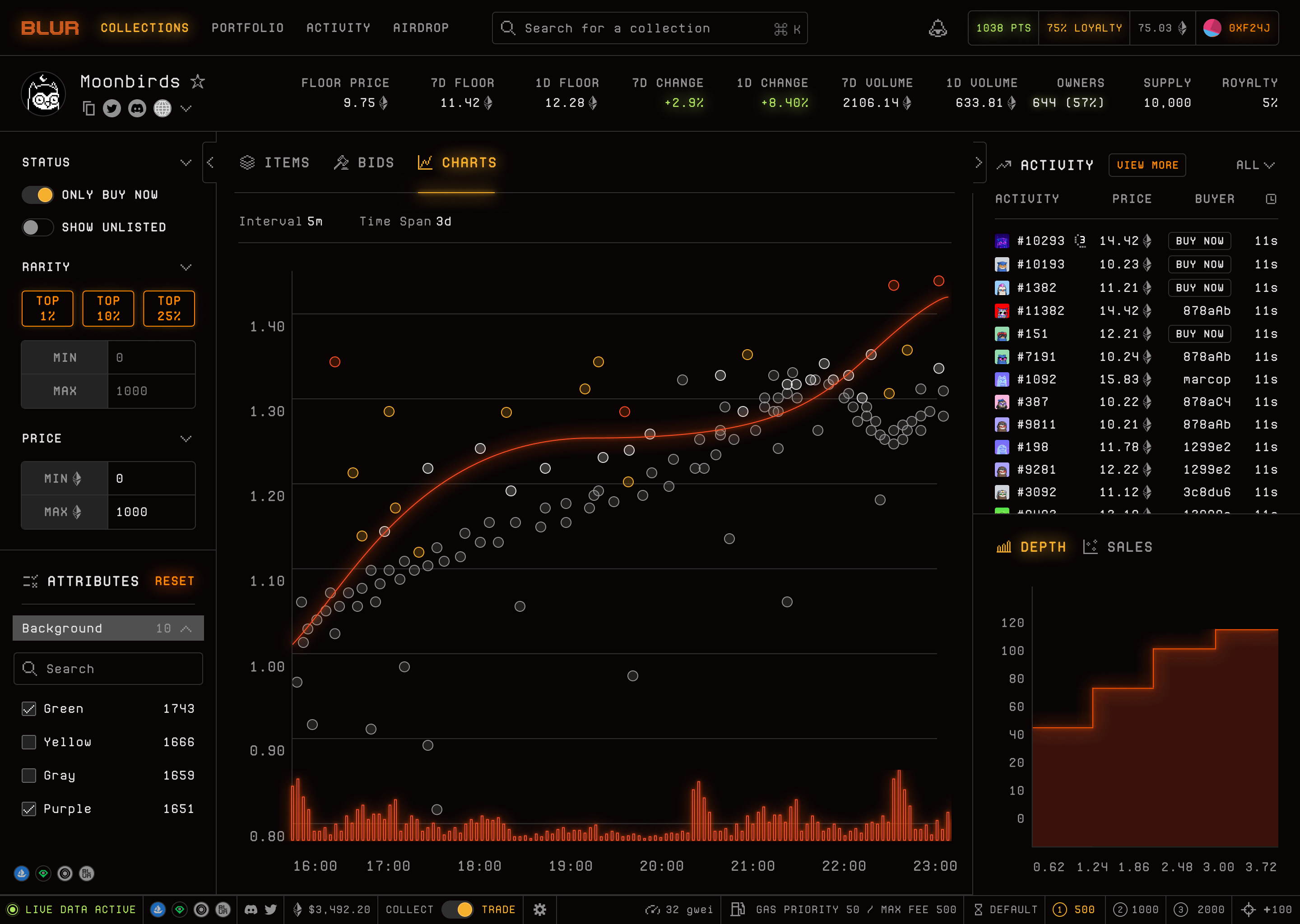
The collection page is the heart of the product. Floor, depth, listings, bids, activity, and a live price chart sit together, with no tab-switching needed to make decisions. Traders flip between Items, Bids, and Charts without losing the order book or the activity feed, so the whole market reads at a glance.
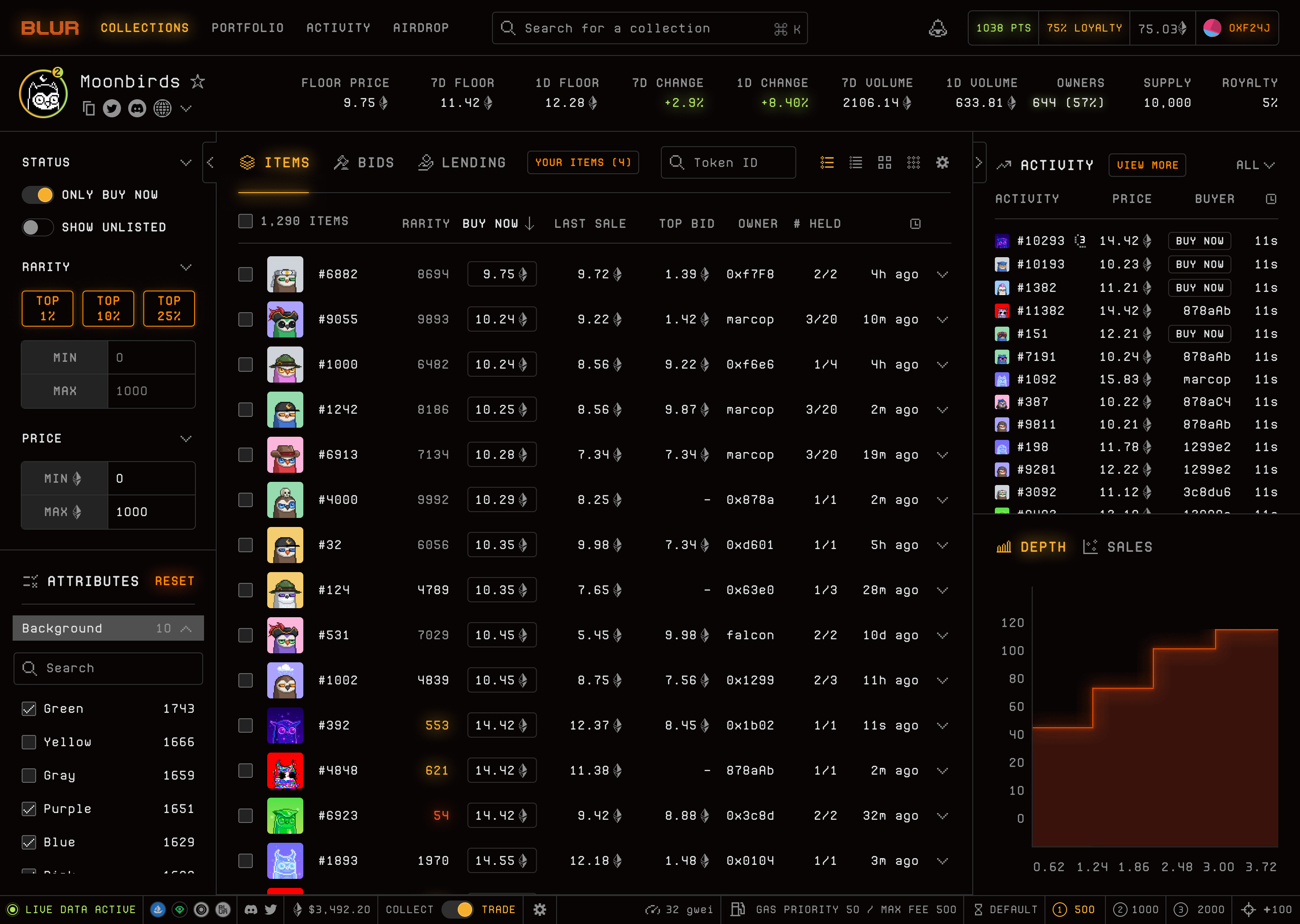
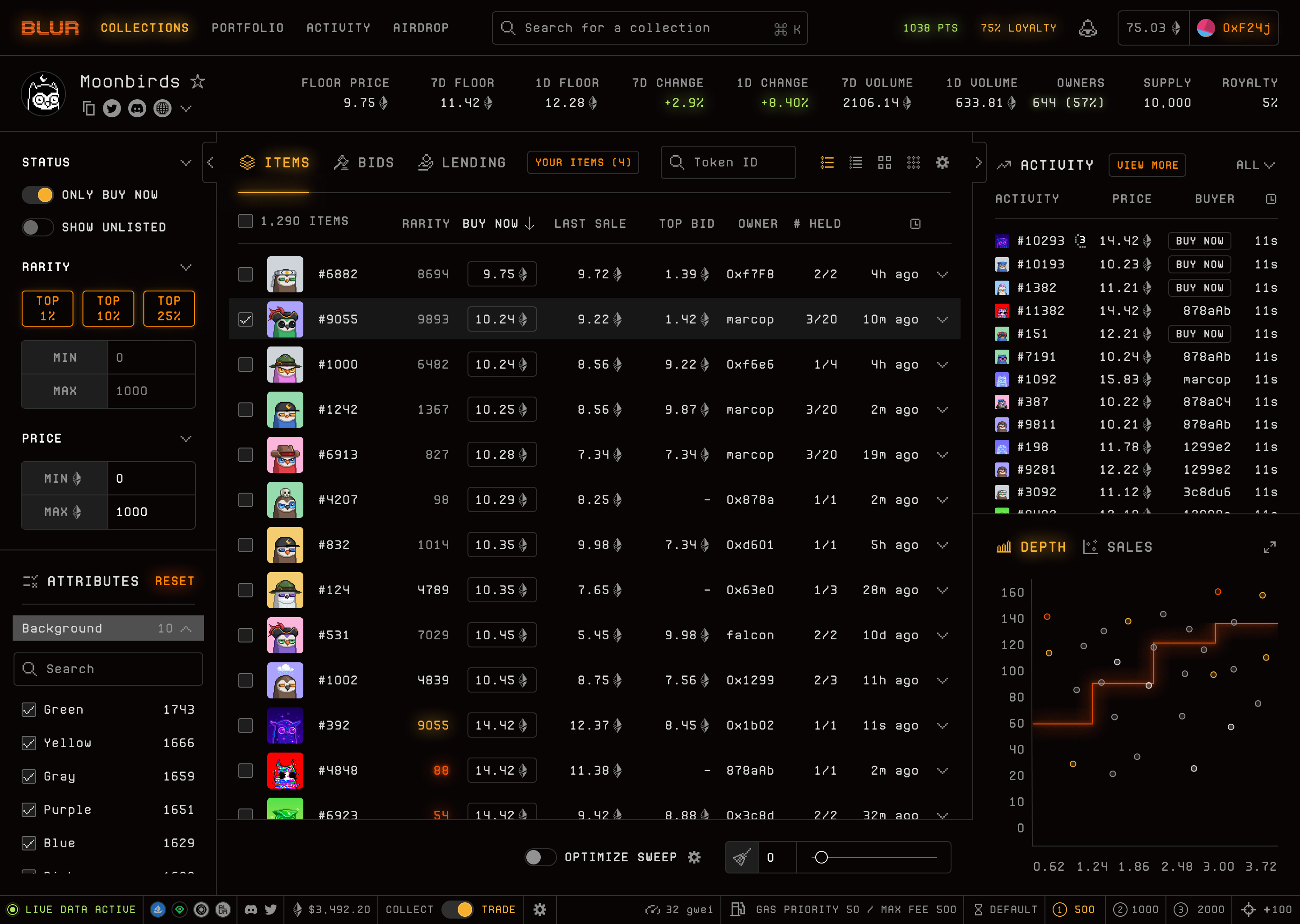
The order book as a list: Every listing is a row traders can read and act on instantly. Price, rarity, last sale, time held are all filterable and sortable.
Finding the trade
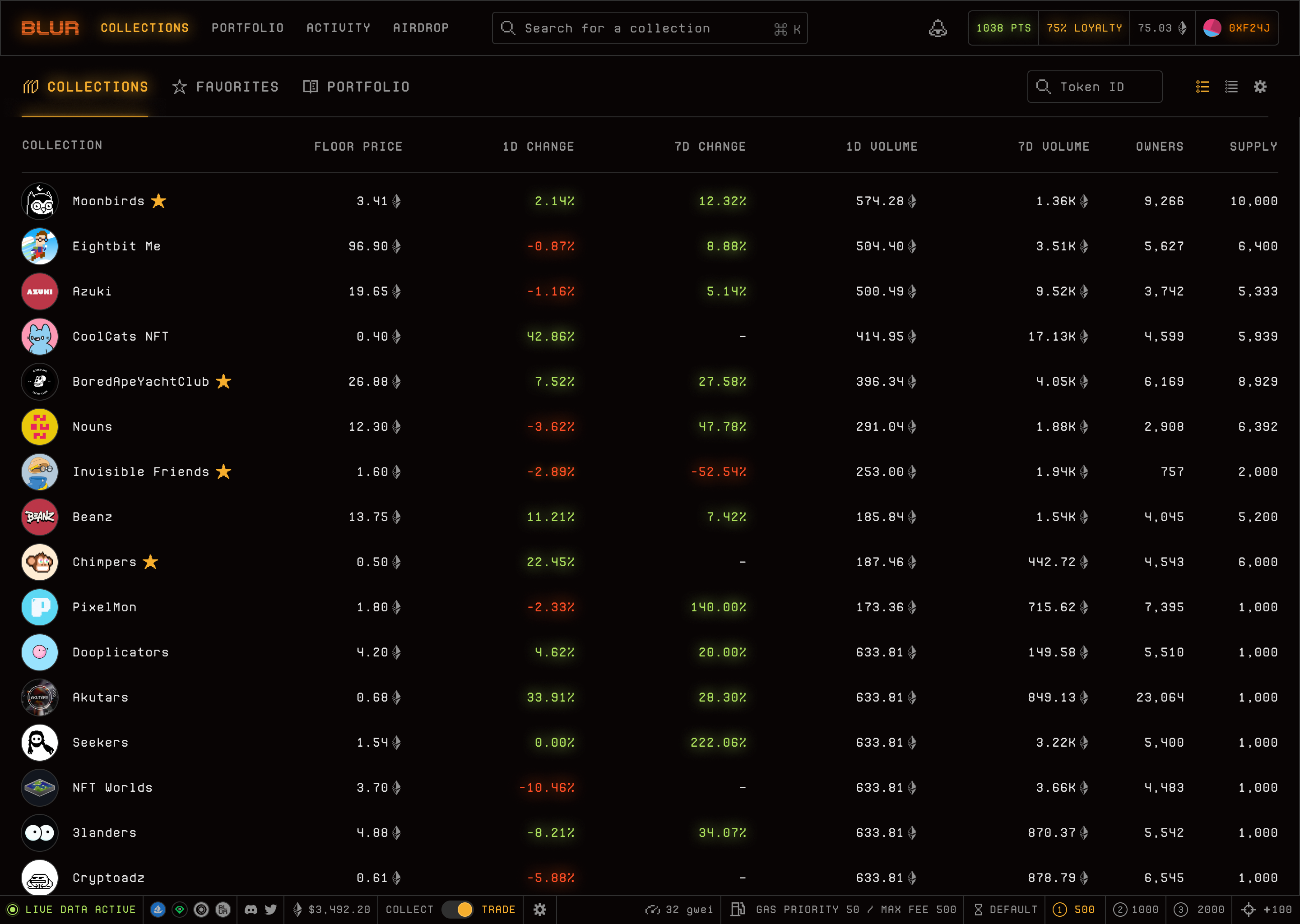
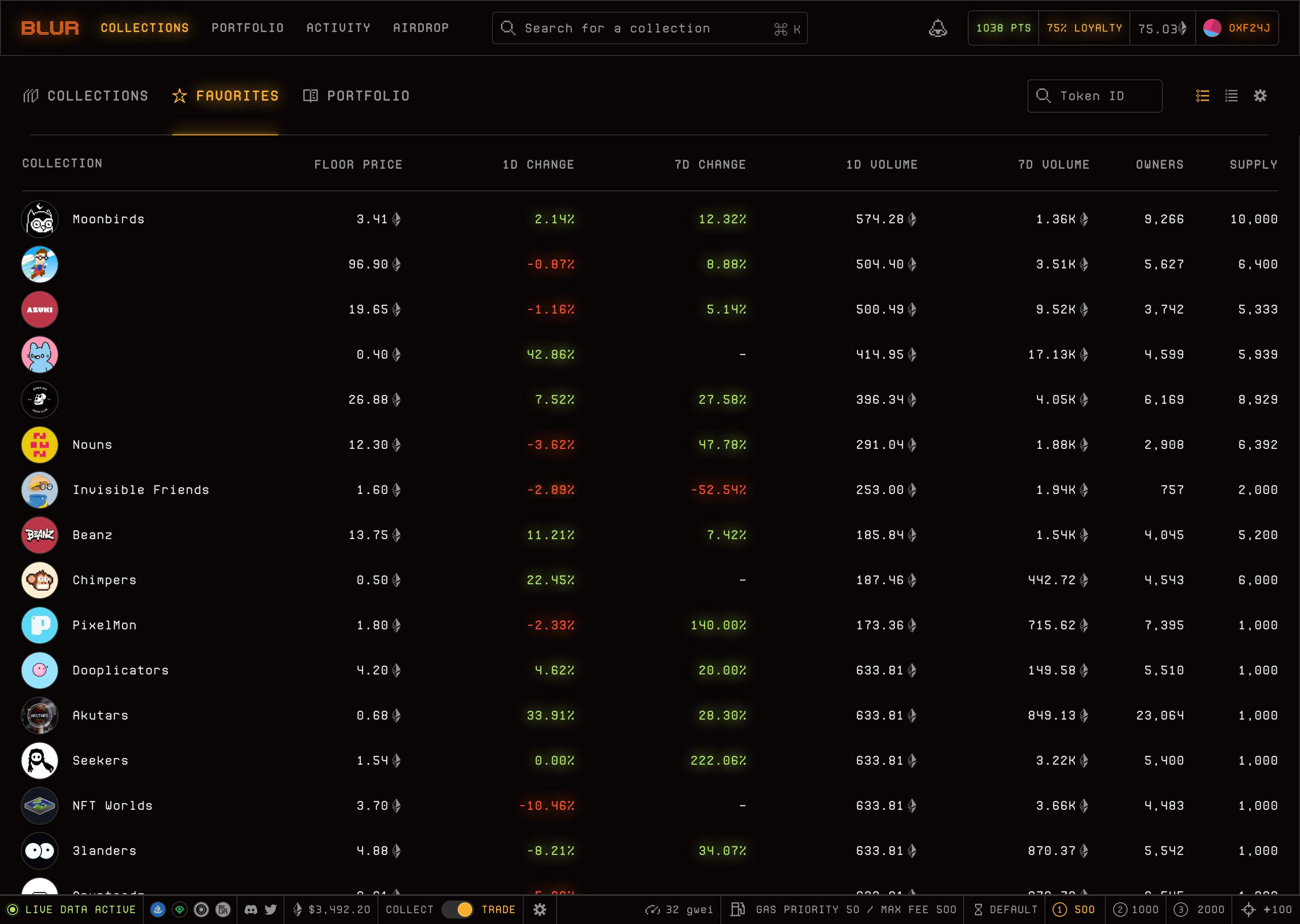
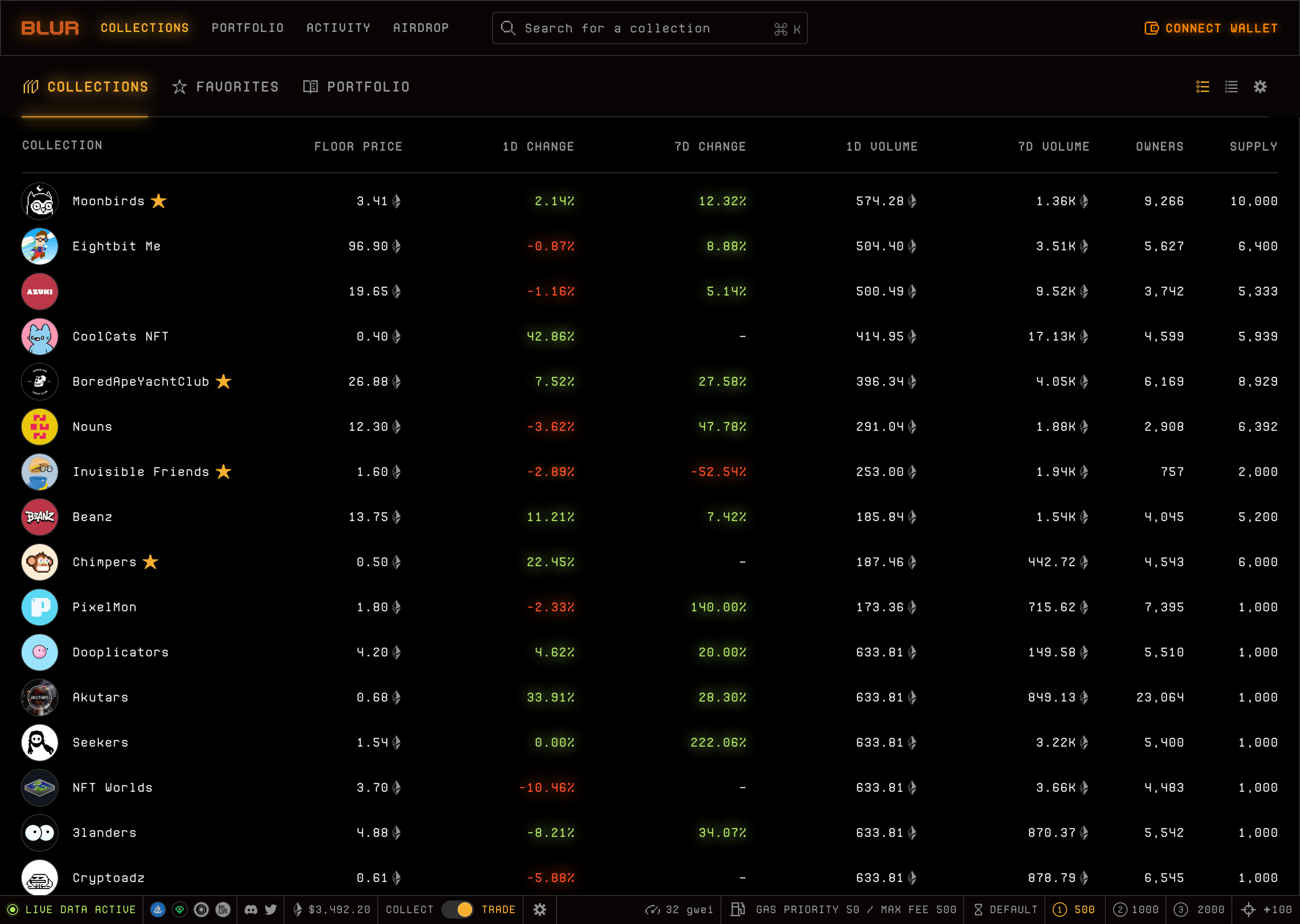
Discovery is a ranked, scannable leaderboard of every collection. Including: Floor price, 1D and 7D change, volume, owners, supply (the figures a trader actually reads). Favorites pin the collections a trader watches to the top, so the important NFTs are one keystroke away.
Sweep and bid like a pro
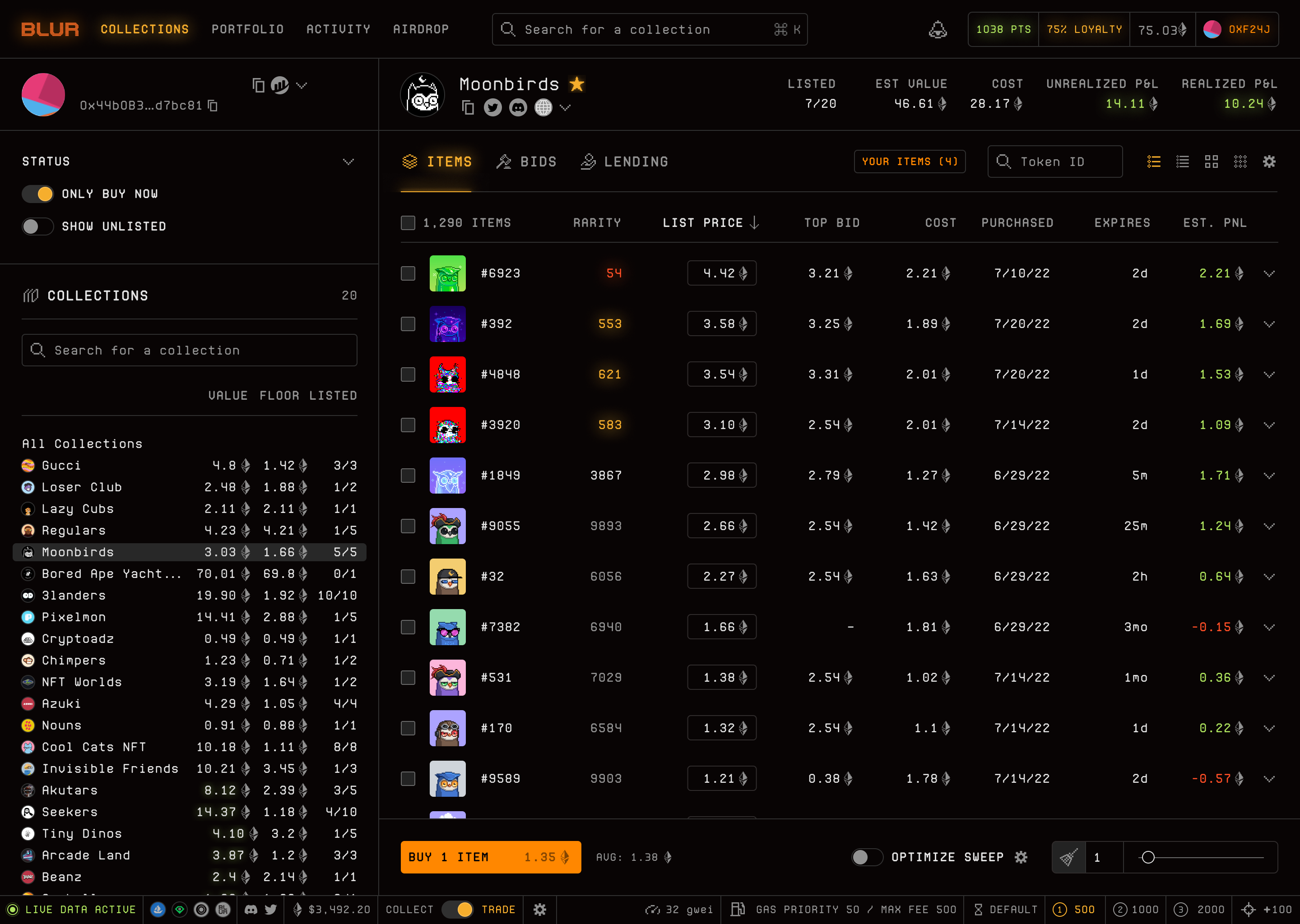
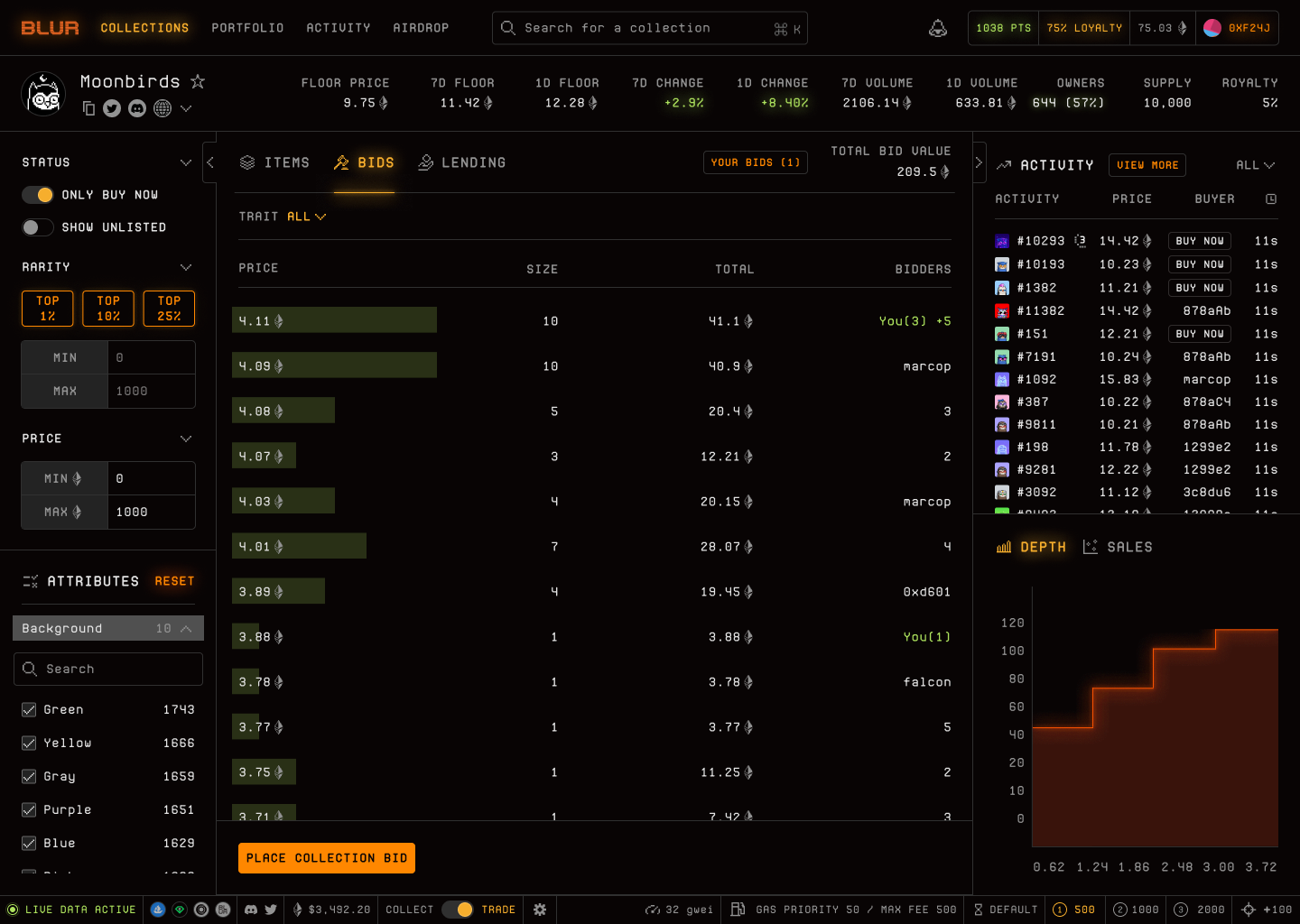
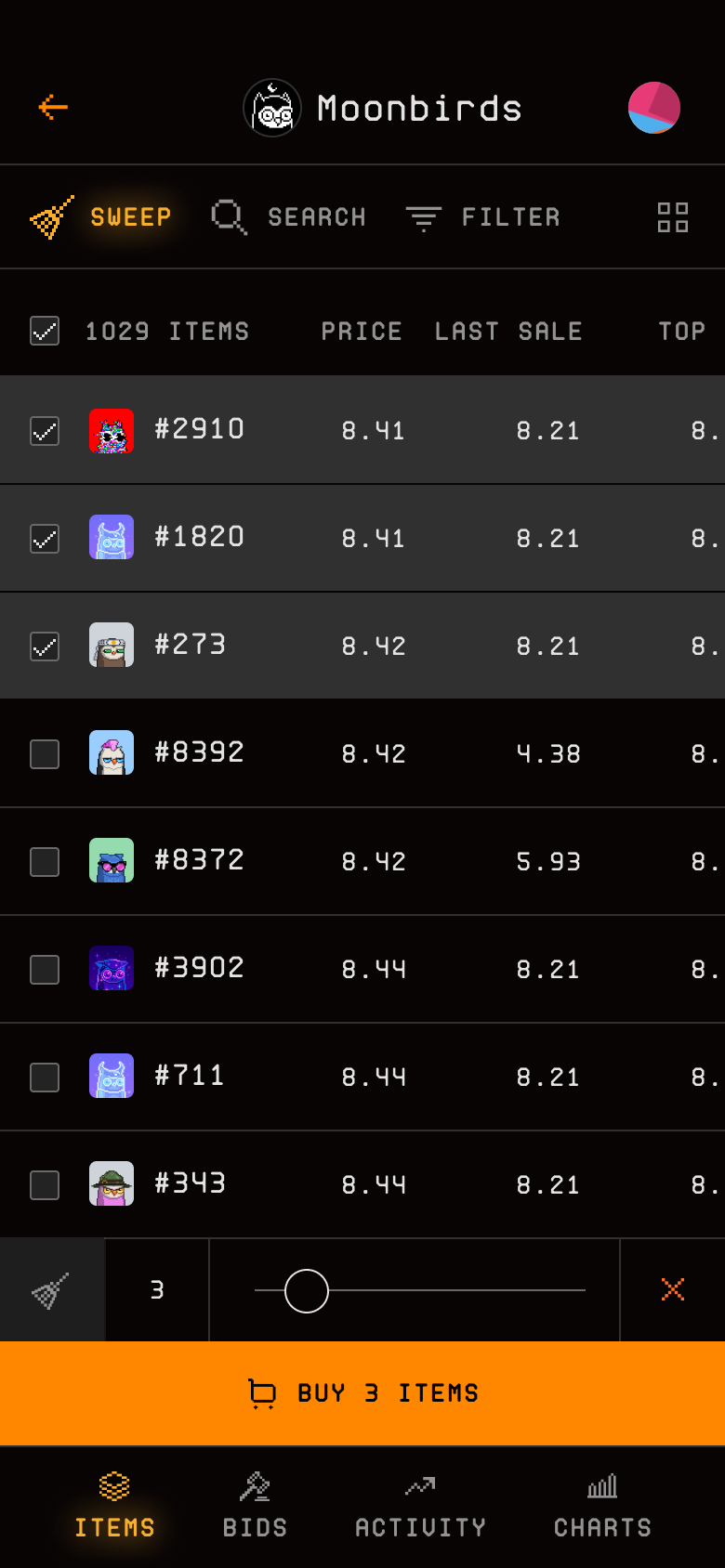
Buying isn’t one item at a time. Optimize Sweep lets a trader buy the floor in bulk at the best blended price with a single slider, and collection bids turn buying pressure into a live ladder.
A configurable trading floor
Power users run Items, Listings, and Sales side by side in a single expanded view, with the sweep controls always within reach. The layout flexes from a focused single panel to a full multi-column desk, depending on how a trader wants to watch the market.
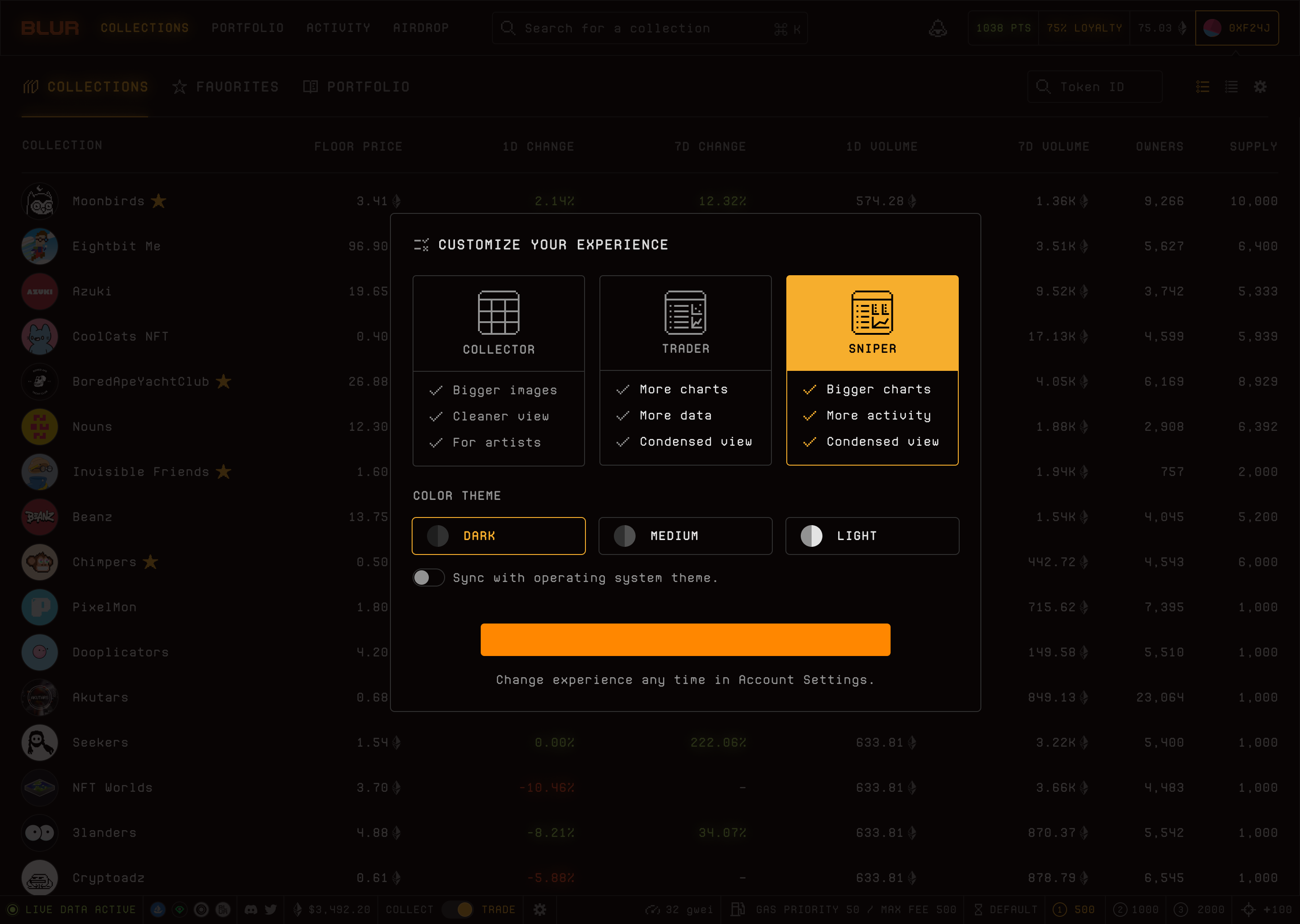
Built to be the trader’s, not ours
The terminal adapts to how each trader works. A Collector / Trader / Sniper persona reshapes the whole layout at once — bigger art for collectors, denser data and more charts for traders — and on top of that, theme, font, and column density are all tunable. The same product can be a calm gallery or a maxed-out data desk.
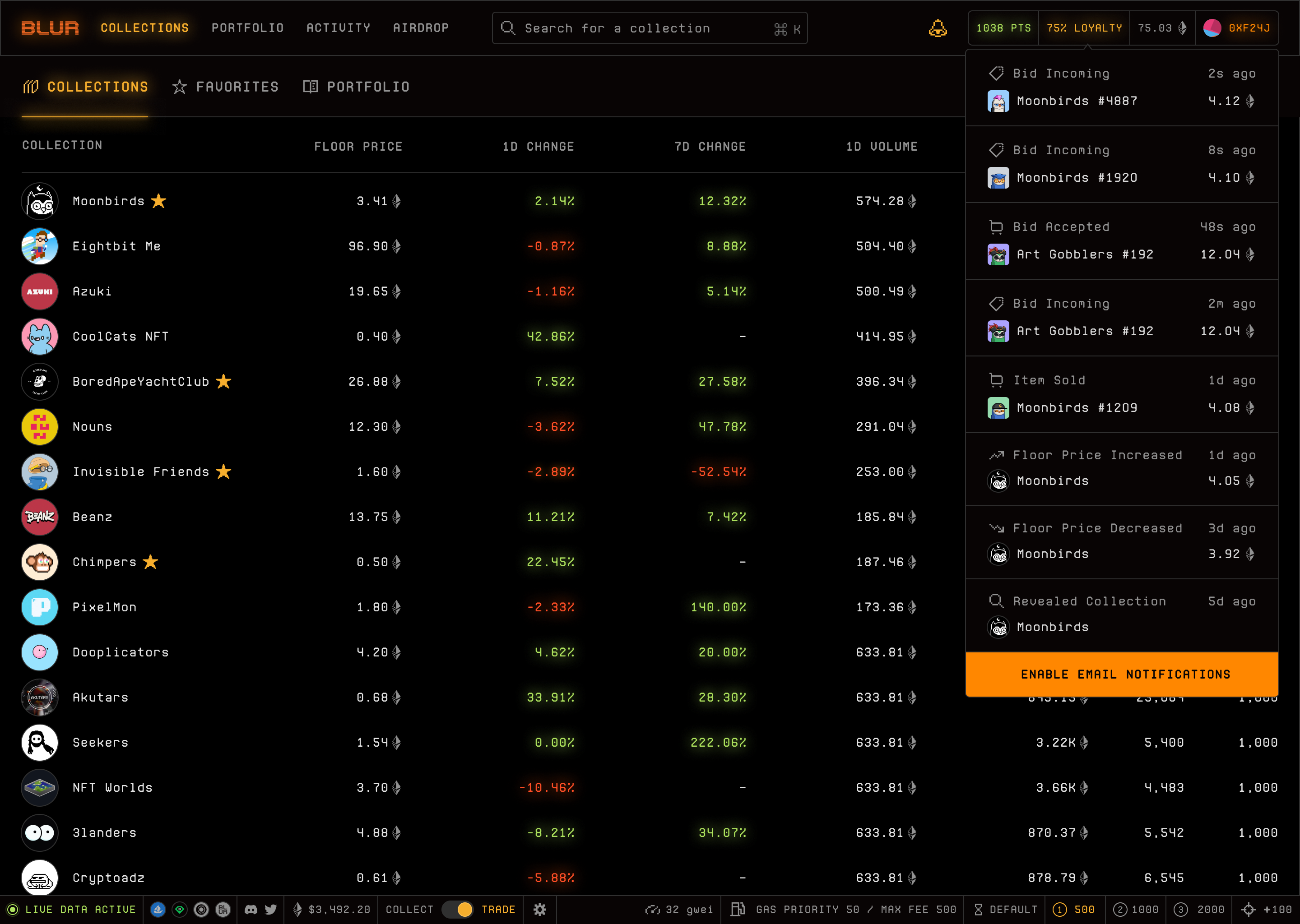
Alerts that keep up with the market
Floors move in seconds, so the product pushes the market to the trader. A real-time activity stream flags incoming and accepted bids, sales, and floor moves as they happen, with opt-in notifications so a trader never has to sit and refresh to catch a move.
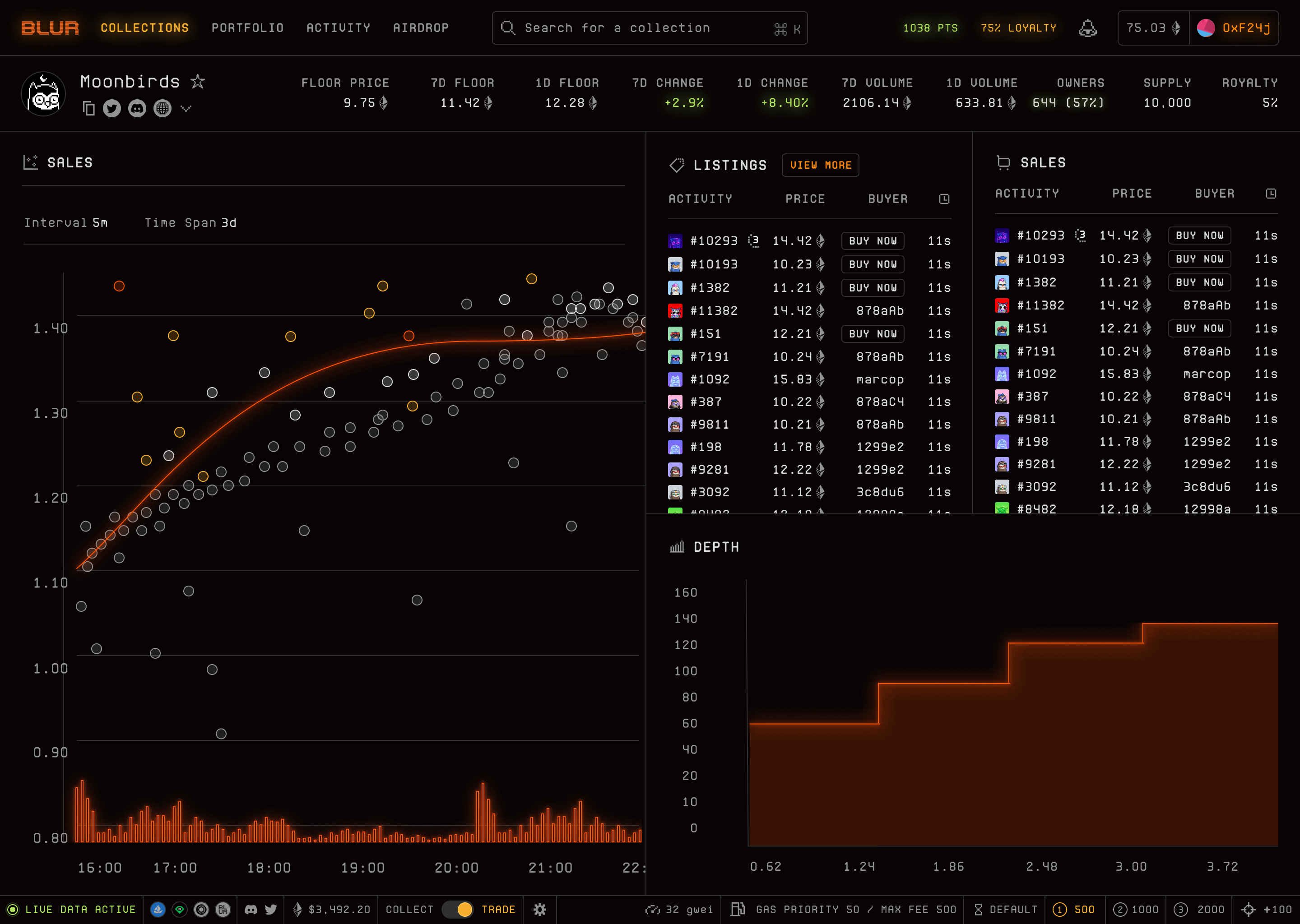
Charts a trader can actually read
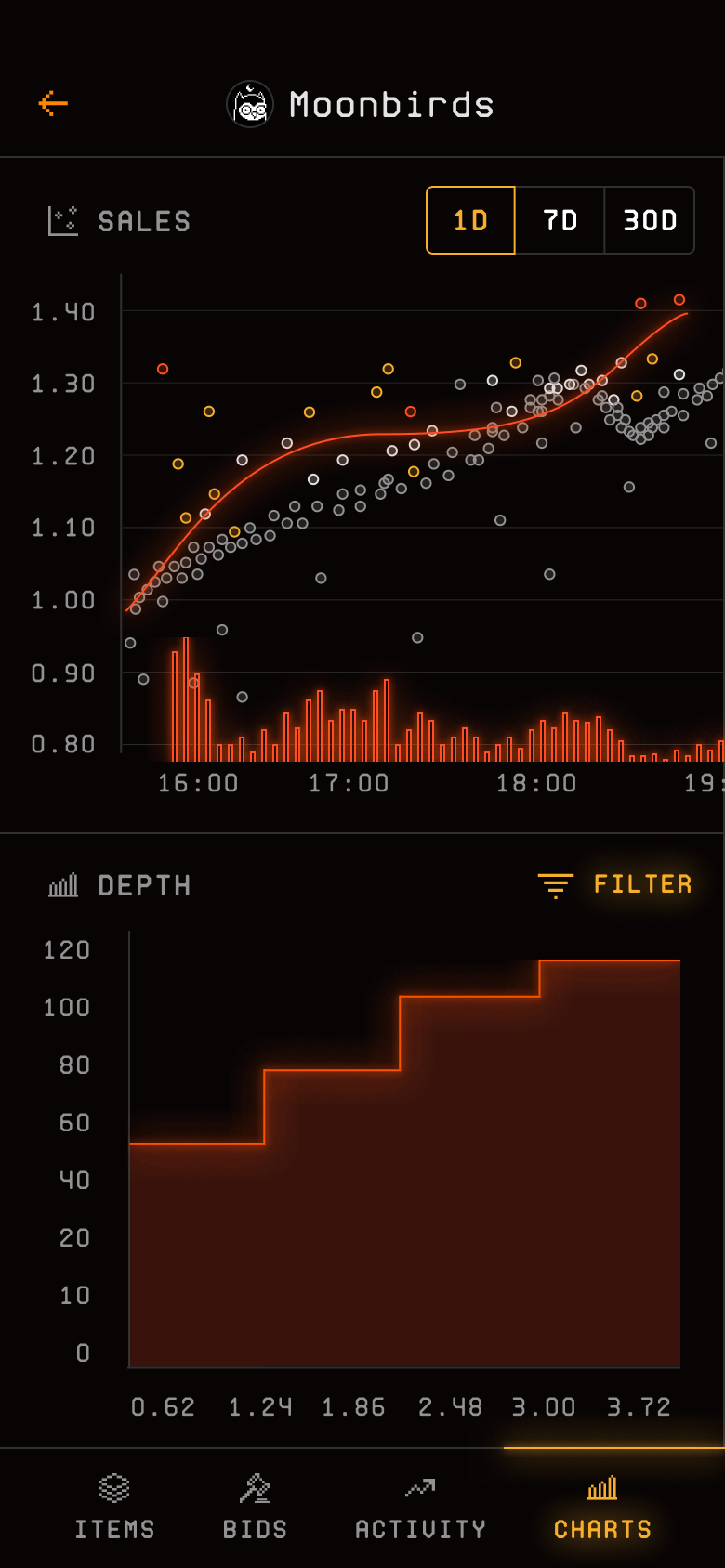
Every collection carries its own market view: a sales scatter and price history, with a depth chart and volume underneath. Price action, listings, and sales read together in one place instead of being scattered across tools.
Liquidity beyond buying and selling
Blur grew into a full financial layer for NFTs. The lending terminal turns blue-chip NFTs into collateral, letting a trader borrow against a position or borrow-and-sell in one move. Rarity, daily fee, and terms are laid out as a ladder a trader can act on instantly.
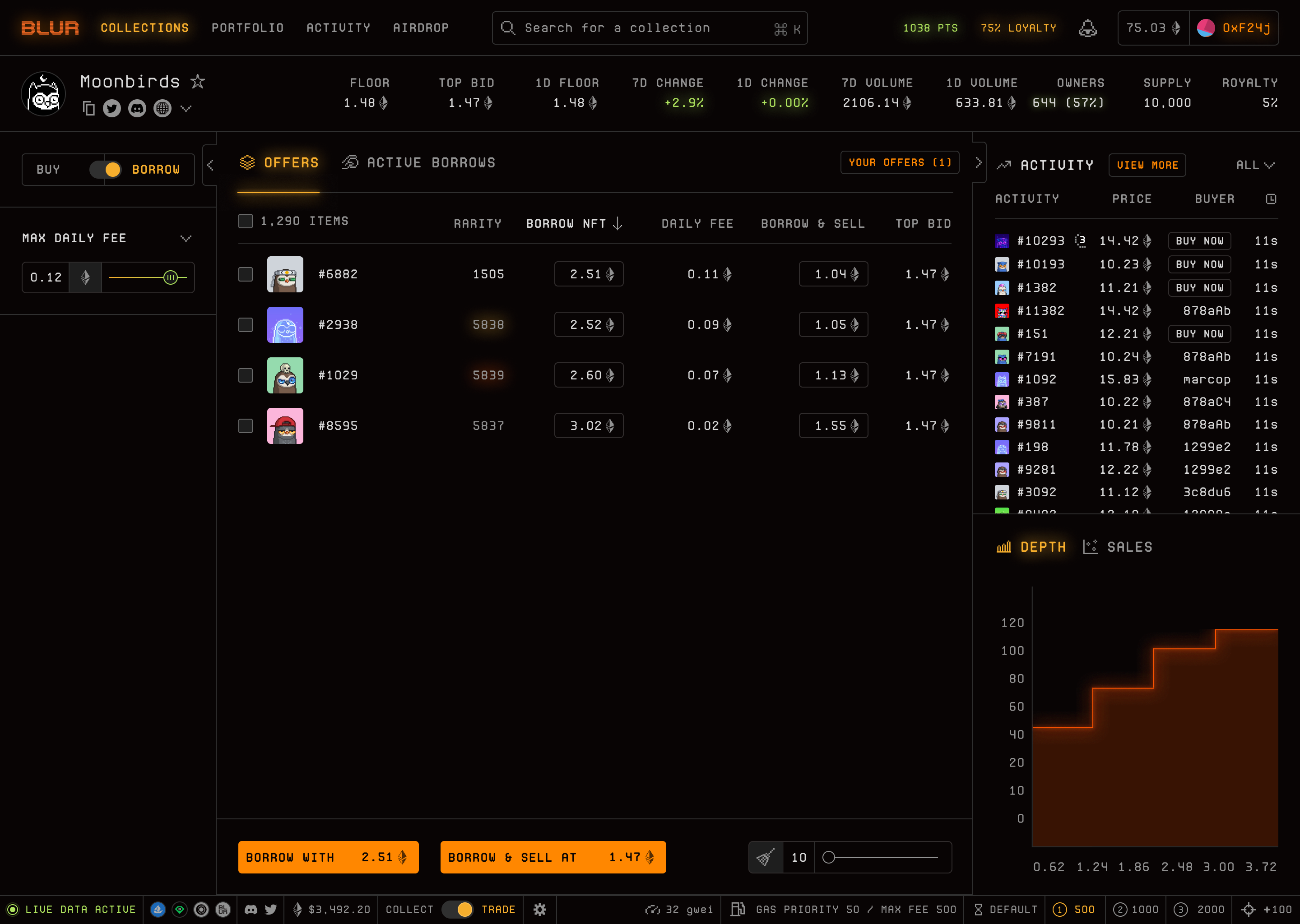
Read the whole market
The Activity view is a live, market-wide feed of sales and listings layered over a multi-collection price chart — so a trader can see where flow is moving across the market, not just inside one collection.
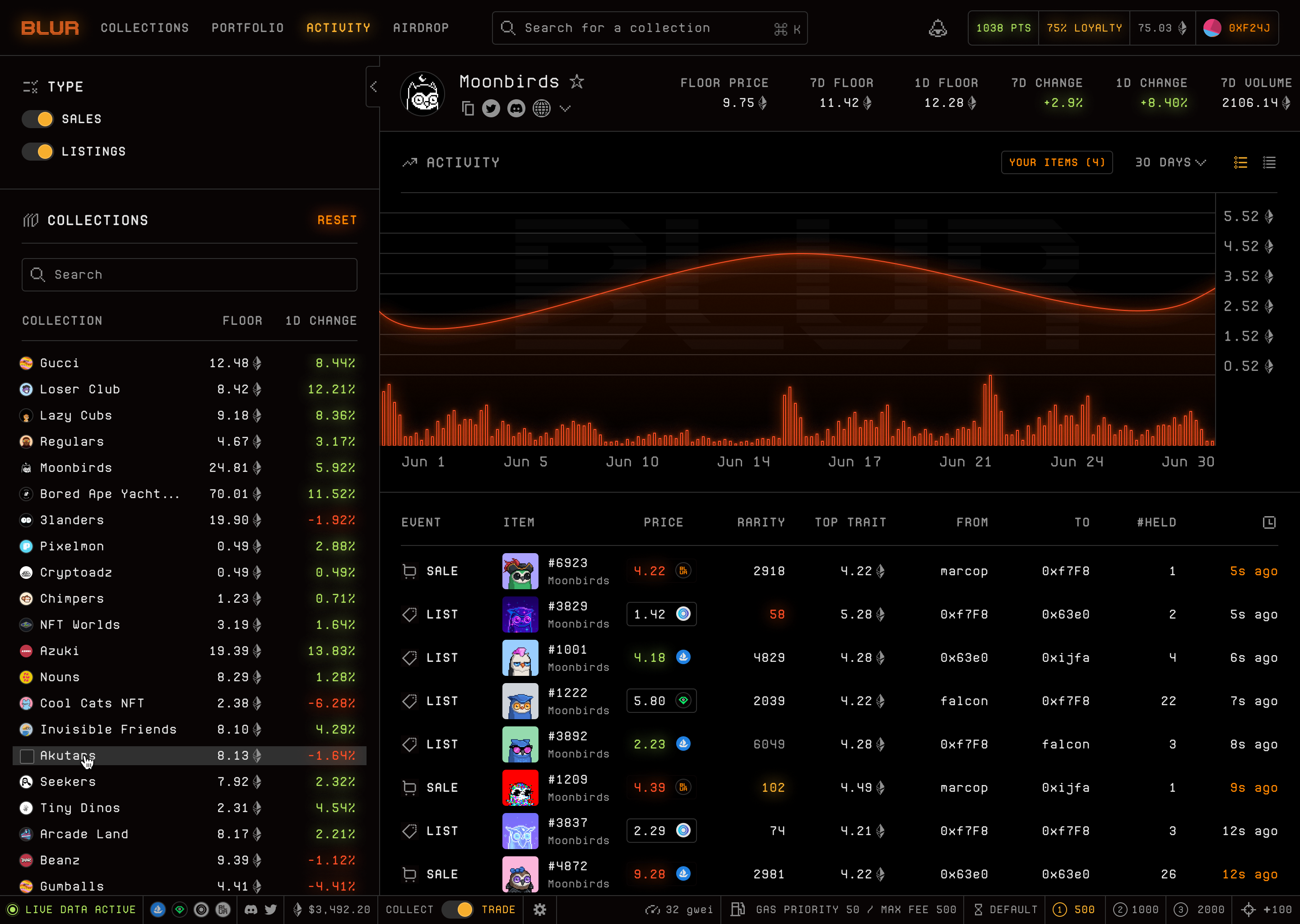
Down to the single token
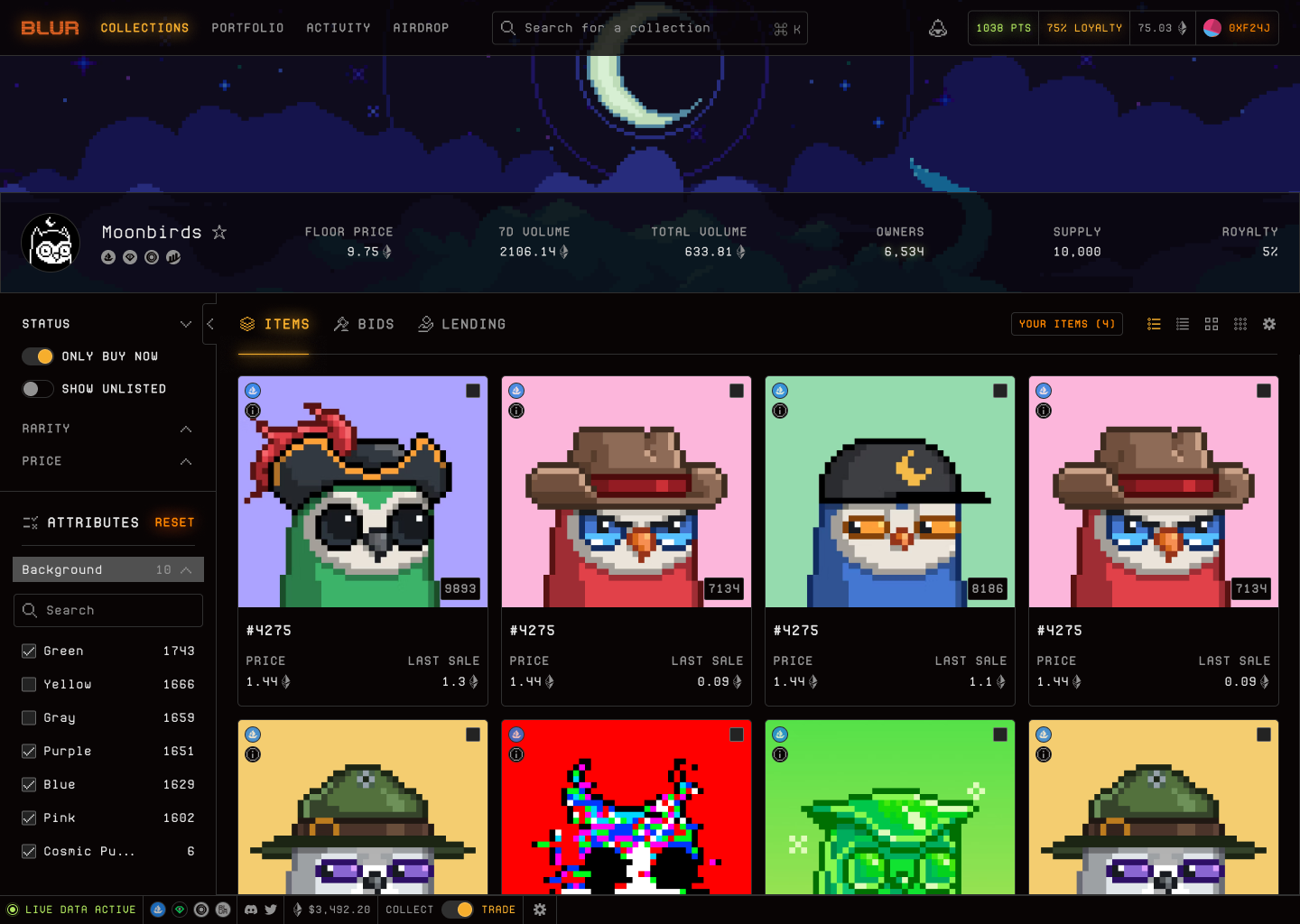
Every token has its own page, with the full-resolution art, a complete trait breakdown with rarity scores, price history, and a live activity log of every sale and bid. Rarity and value are legible at a glance, and a buy is one click away.
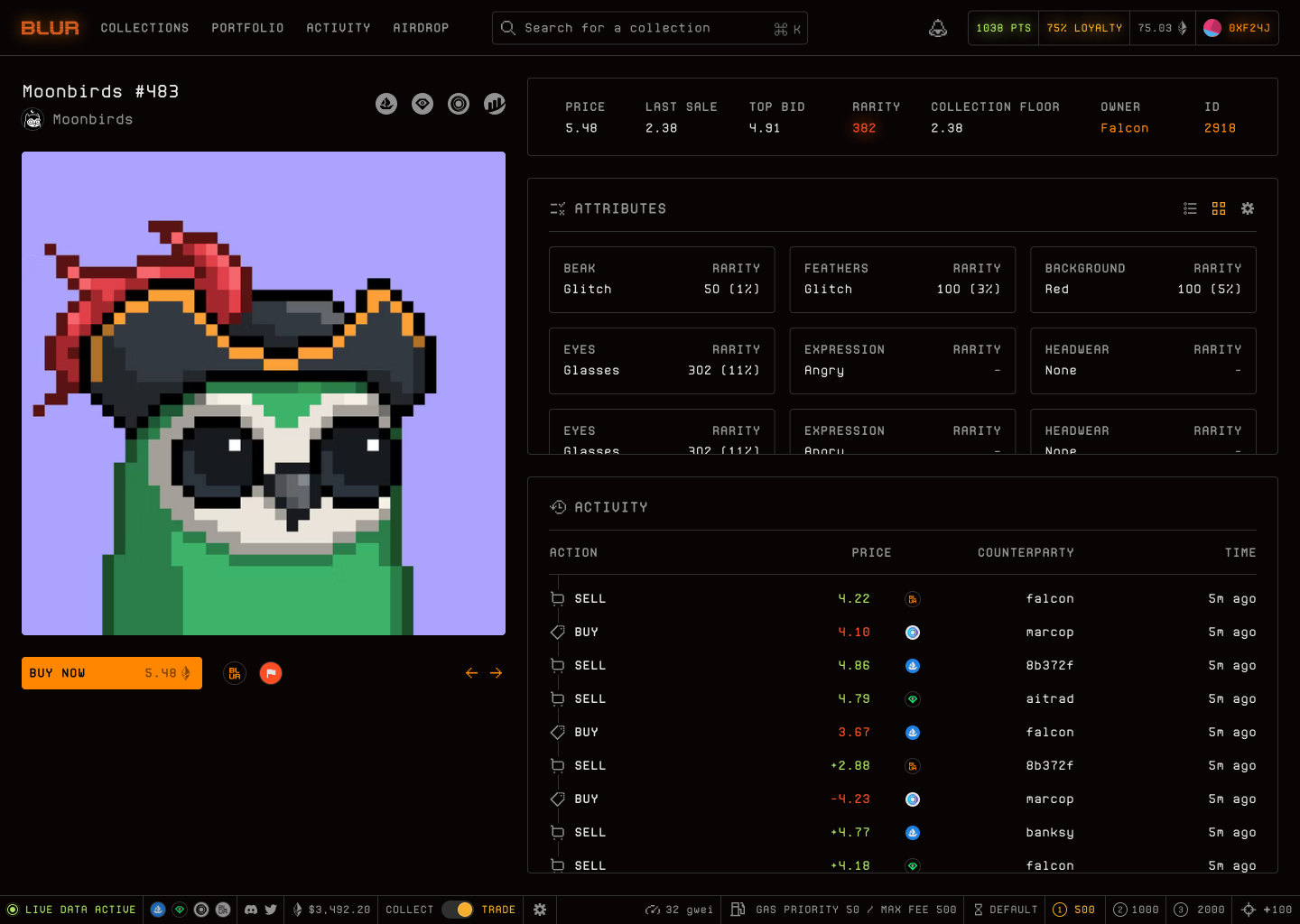
Browse a collection visually by rarity and trait, then drop into any single token without losing the thread.
A frictionless on-ramp
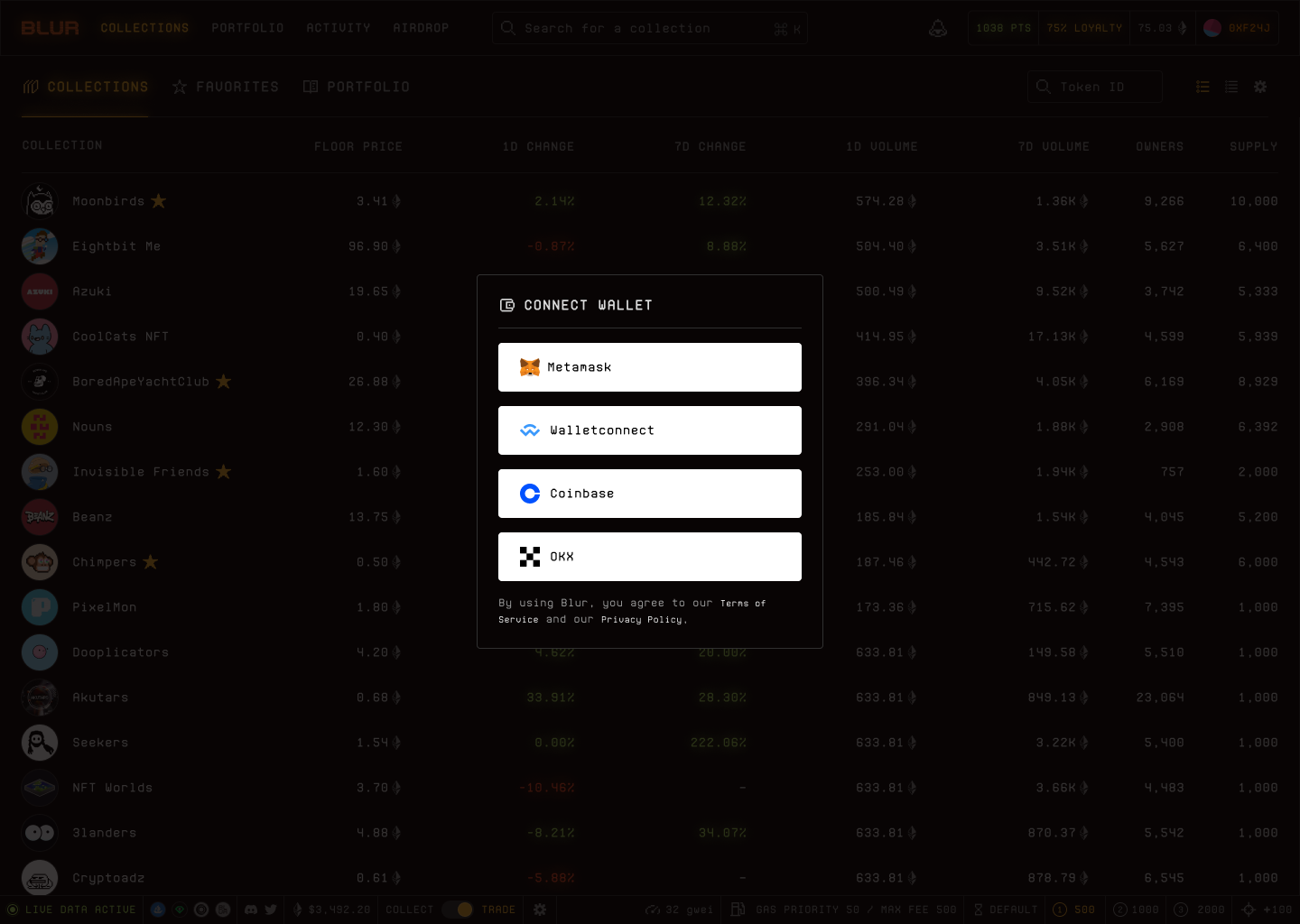
Getting in is a single step: connect a wallet (MetaMask, WalletConnect, Coinbase, OKX), sign once, and start trading. No accounts, no email, no detour between deciding and executing.
The same terminal, in your pocket
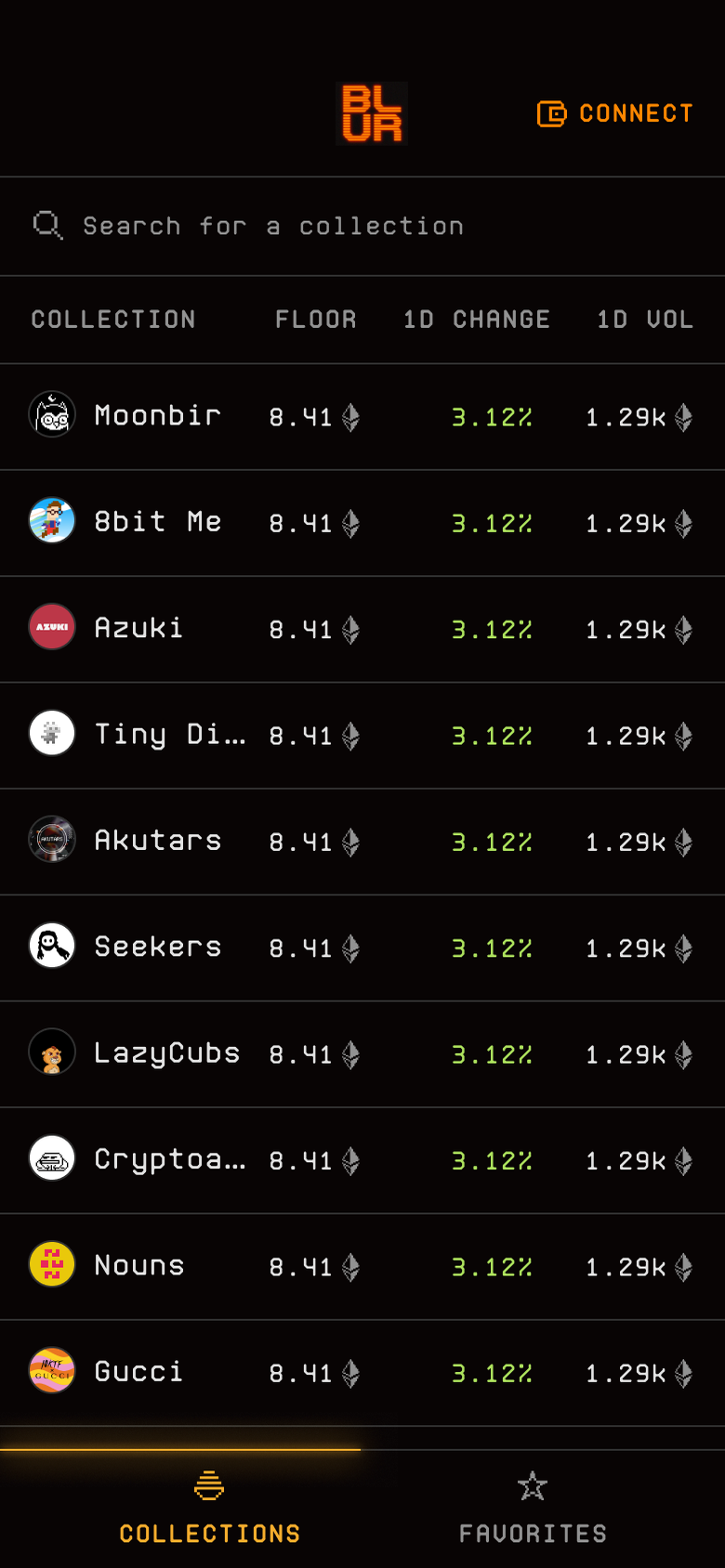
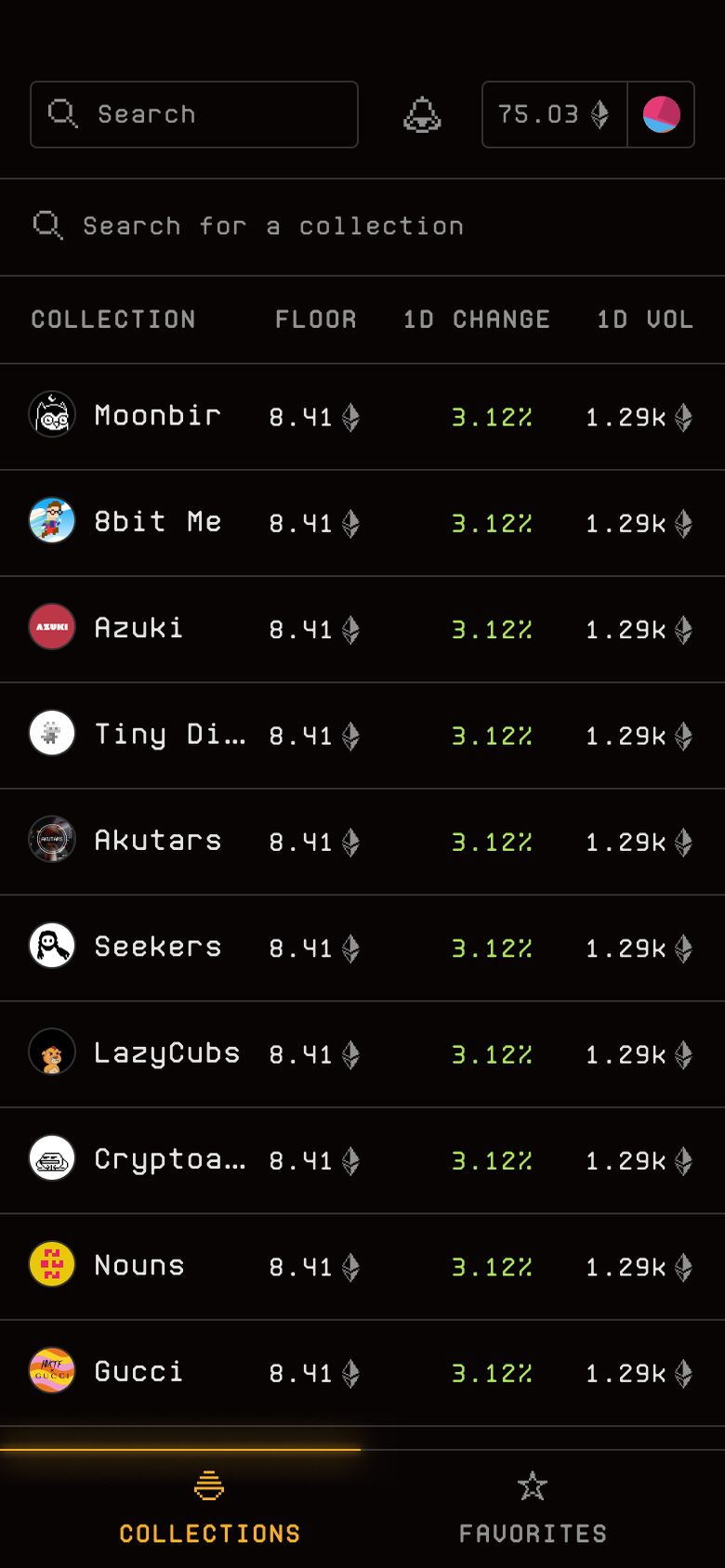
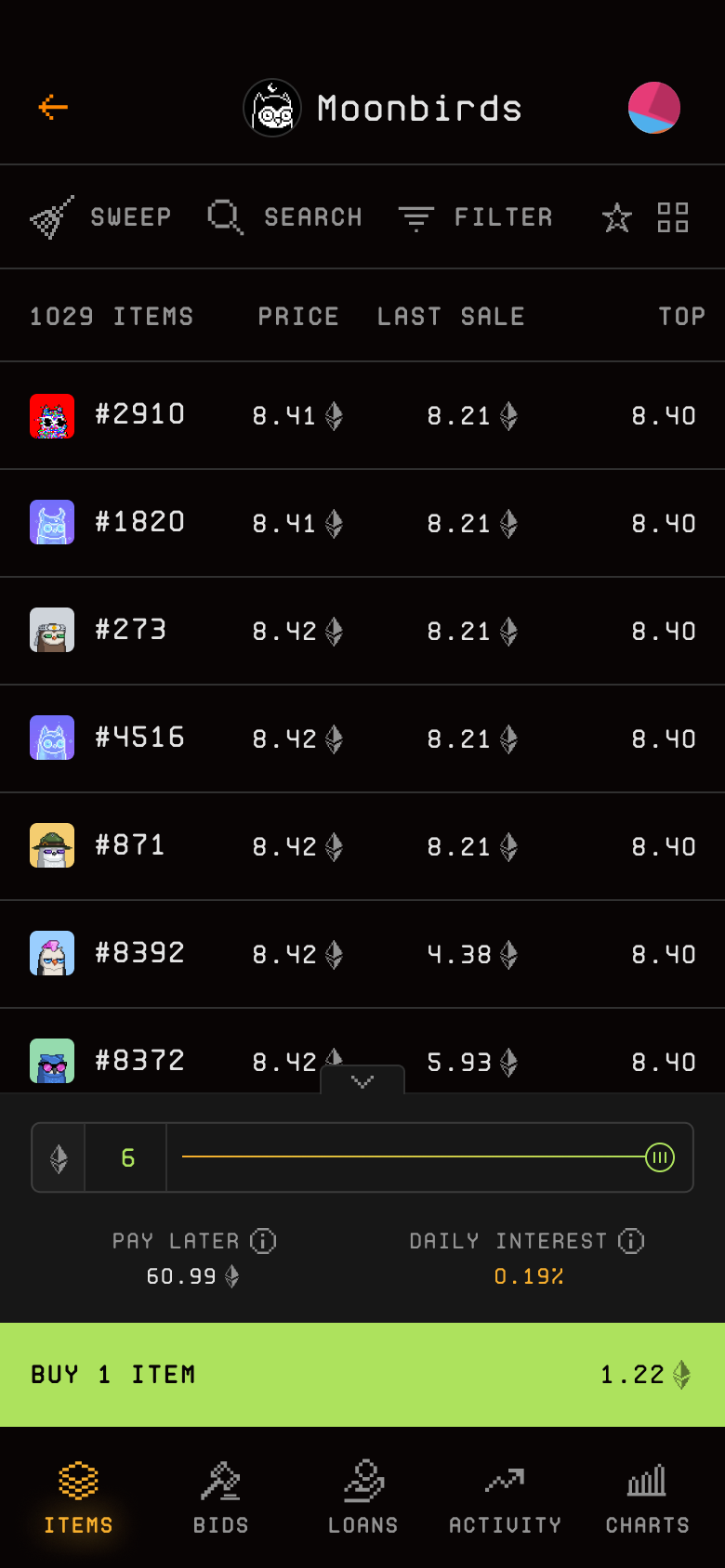
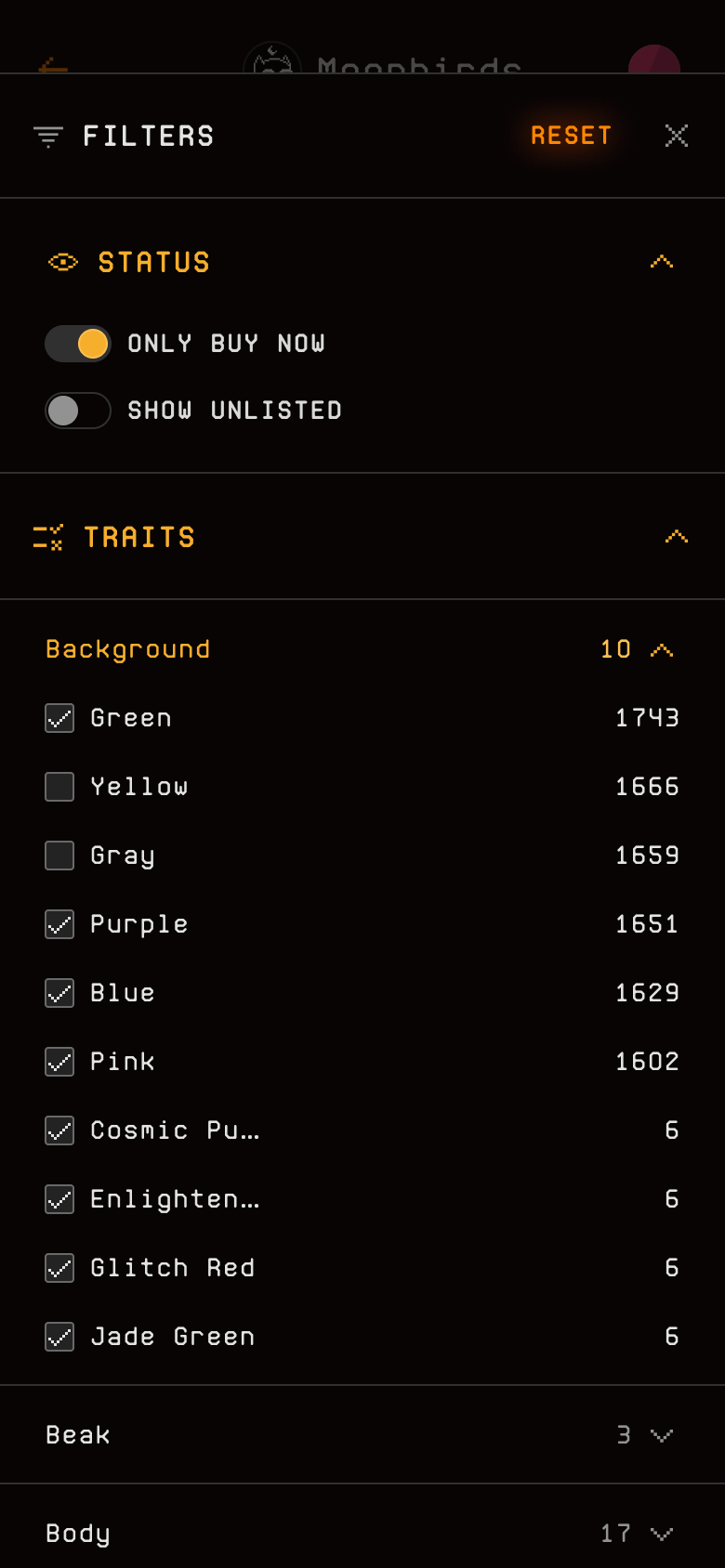
The mobile app keeps the speed and density of the desktop product rather than dumbing it down. Browse the market, sweep the floor, set filters and bids, read charts, and manage a portfolio: the full trading loop, sized for a phone.
Launch
Collections
Market
Buy
Sweep
Filters
Charts
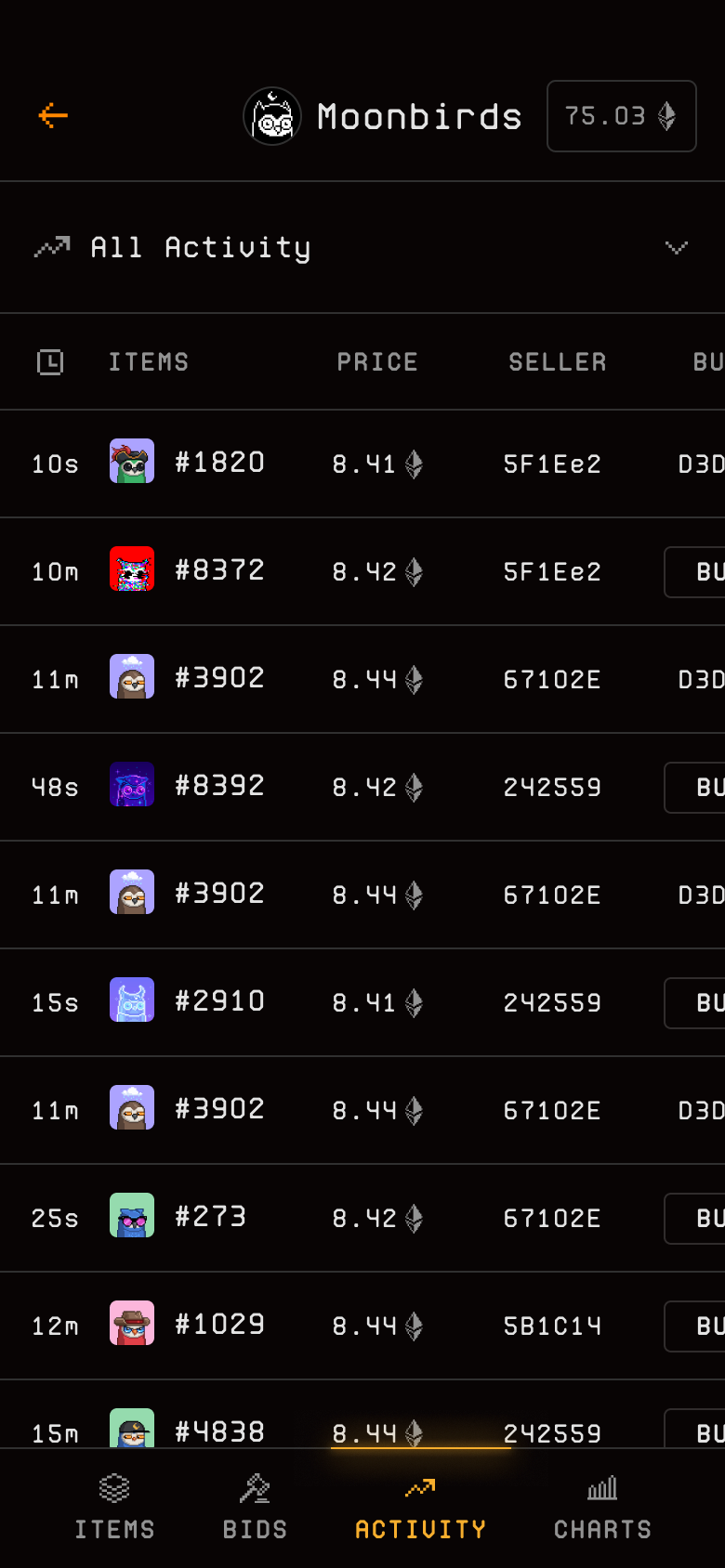
Activity
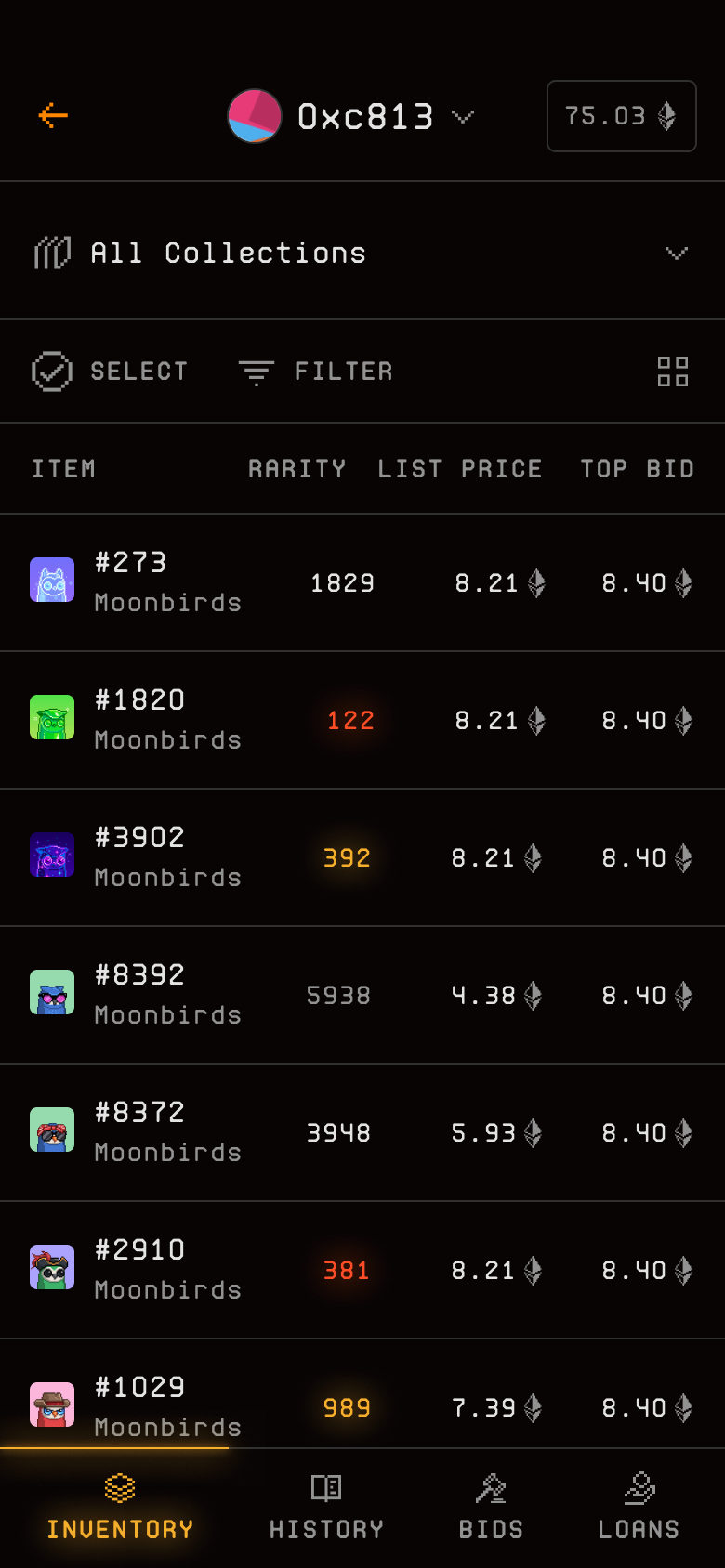
Portfolio
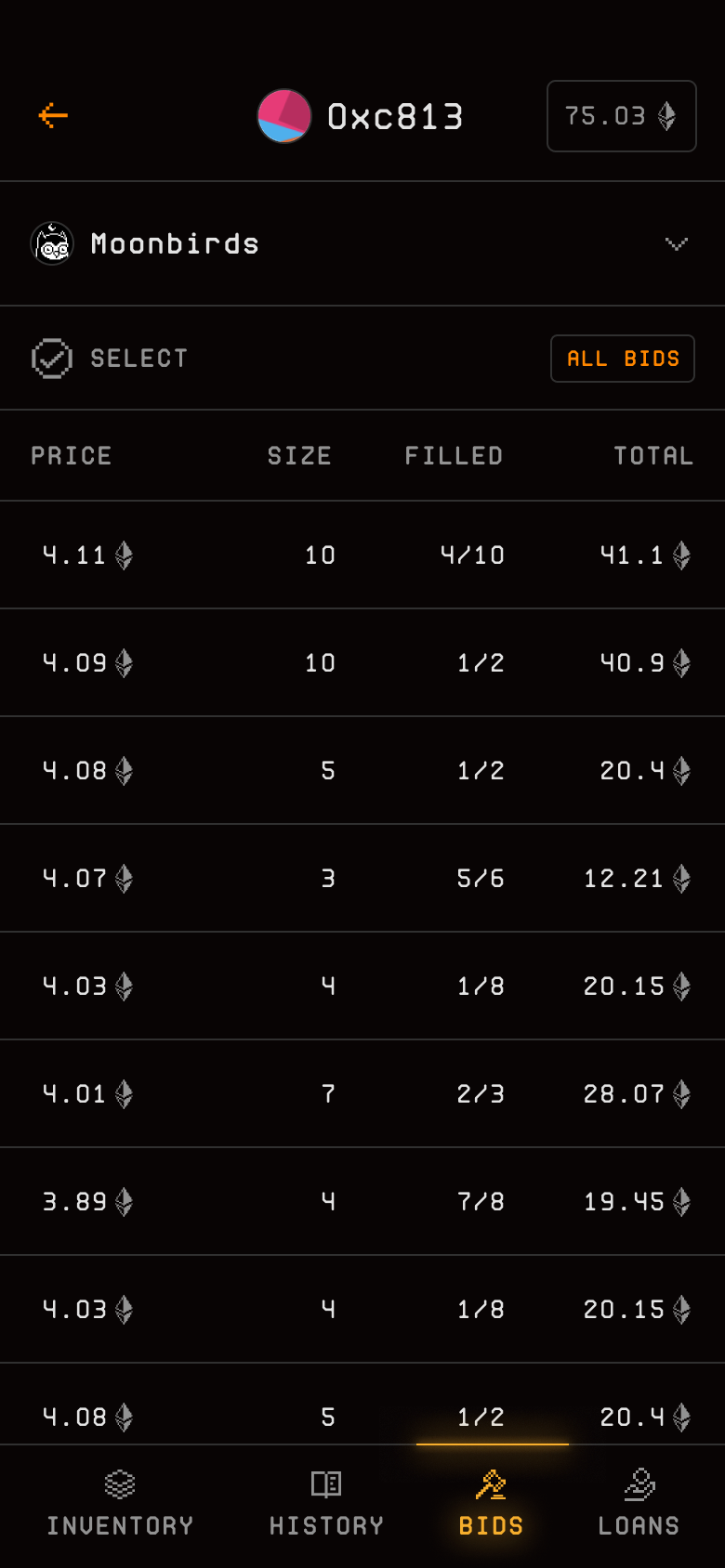
Bids
A brand unlike anything in crypto
Crypto in 2022 was a sea of the same gradients and geometric sans-serifs. To stand out, we chose a different direction entirely. An 80s-arcade, synthwave world of neon wireframes, film grain, and a custom pixel typeface. It was loud and a little dangerous, but it gave Blur a personality no competitor had. Blur’s branding inspired a wave of hundreds of synth- and retrowave crypto brands, some still borrowing Blur’s style years later.
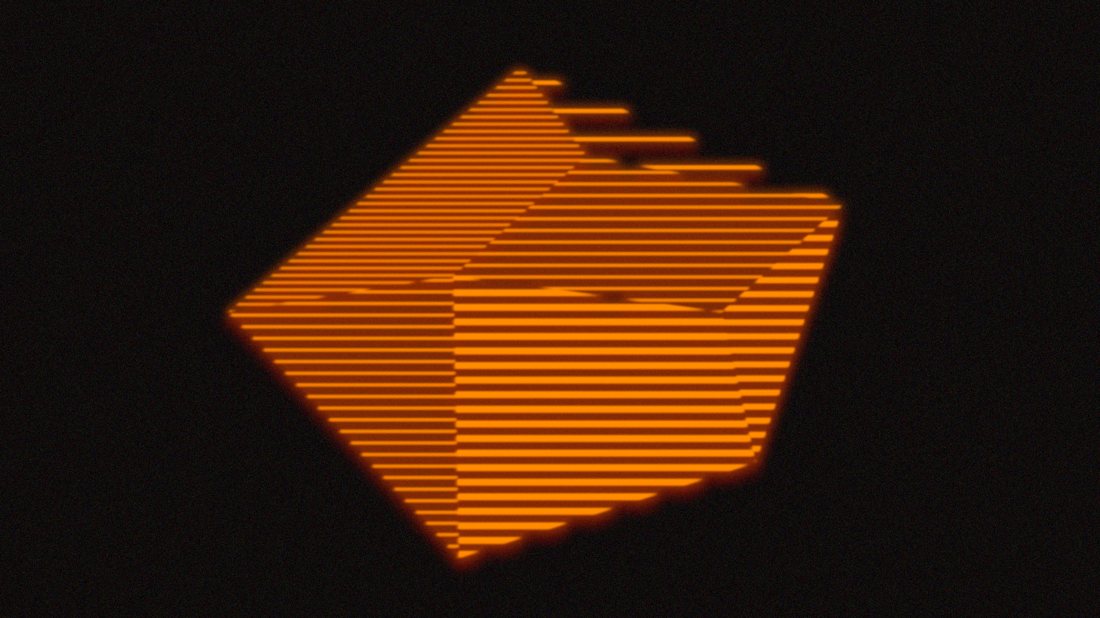
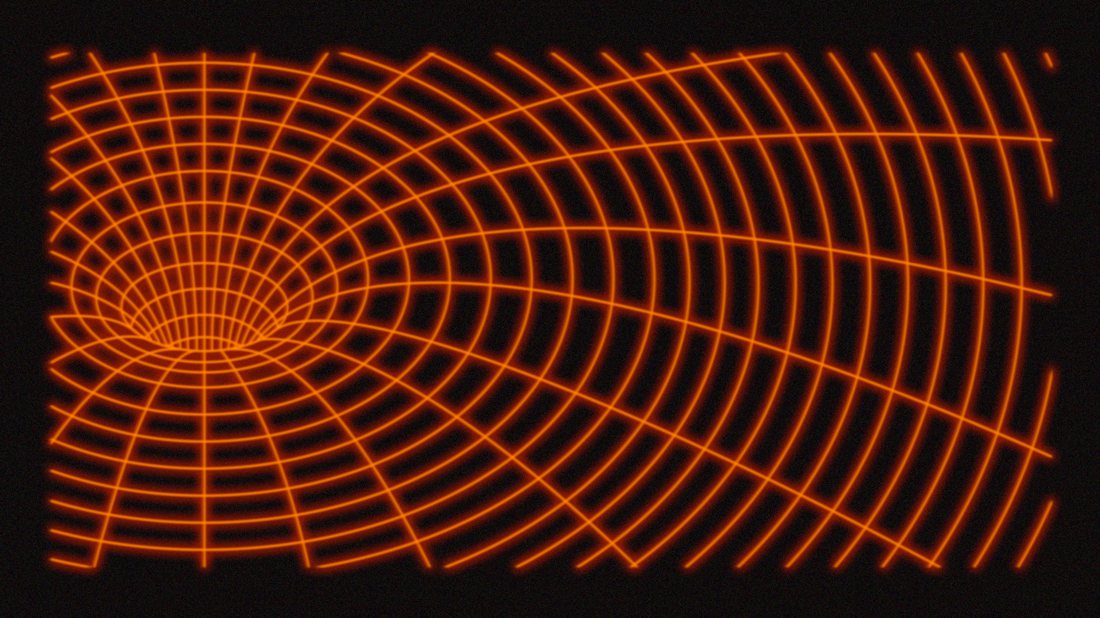
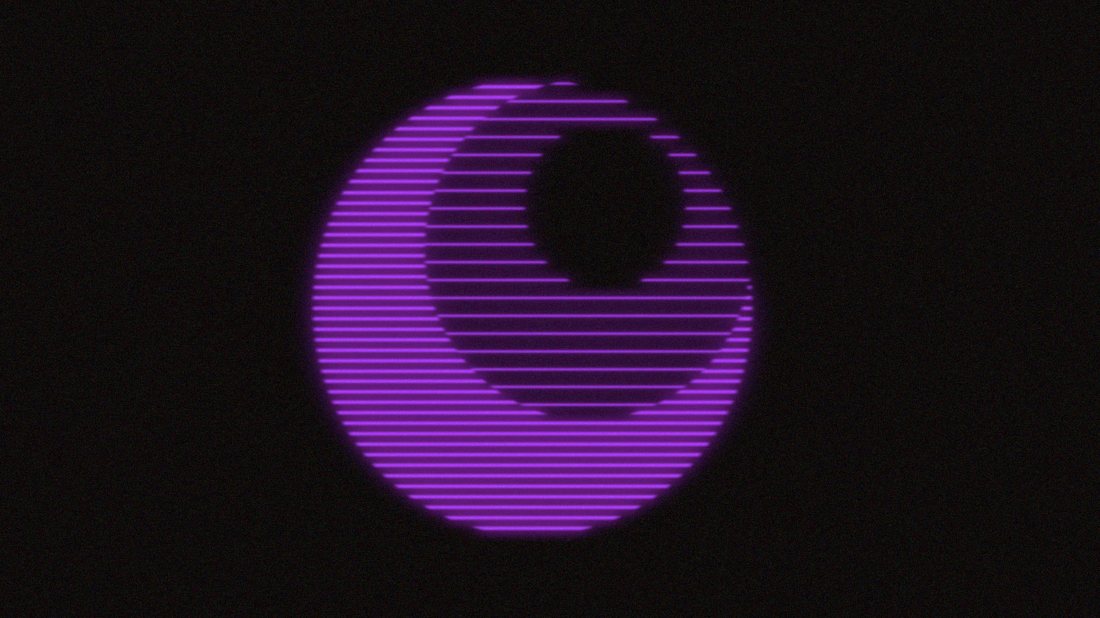
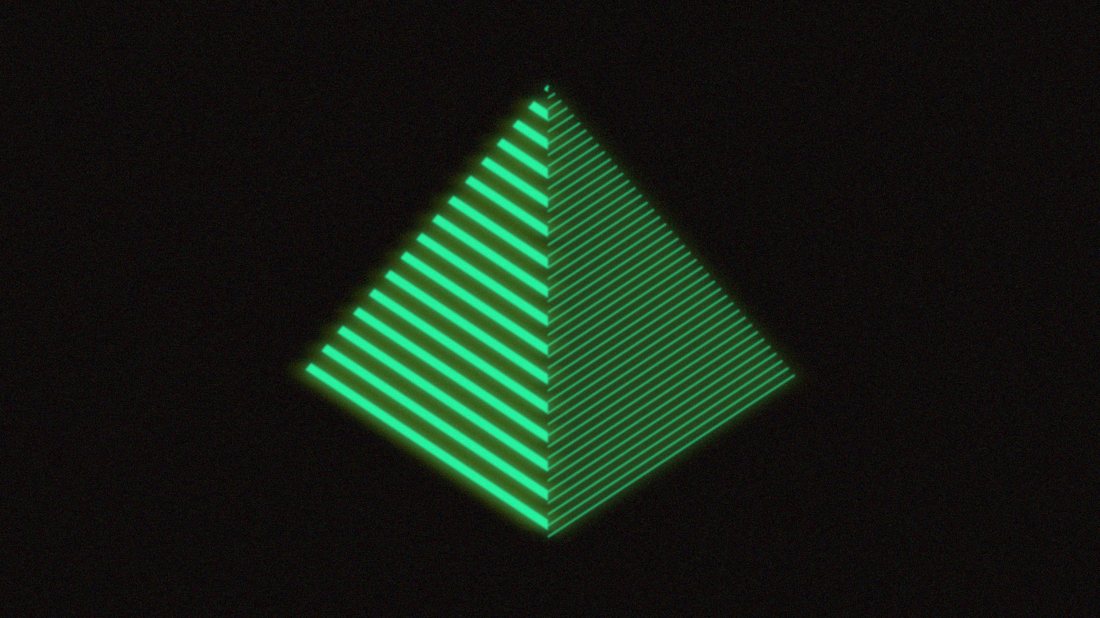
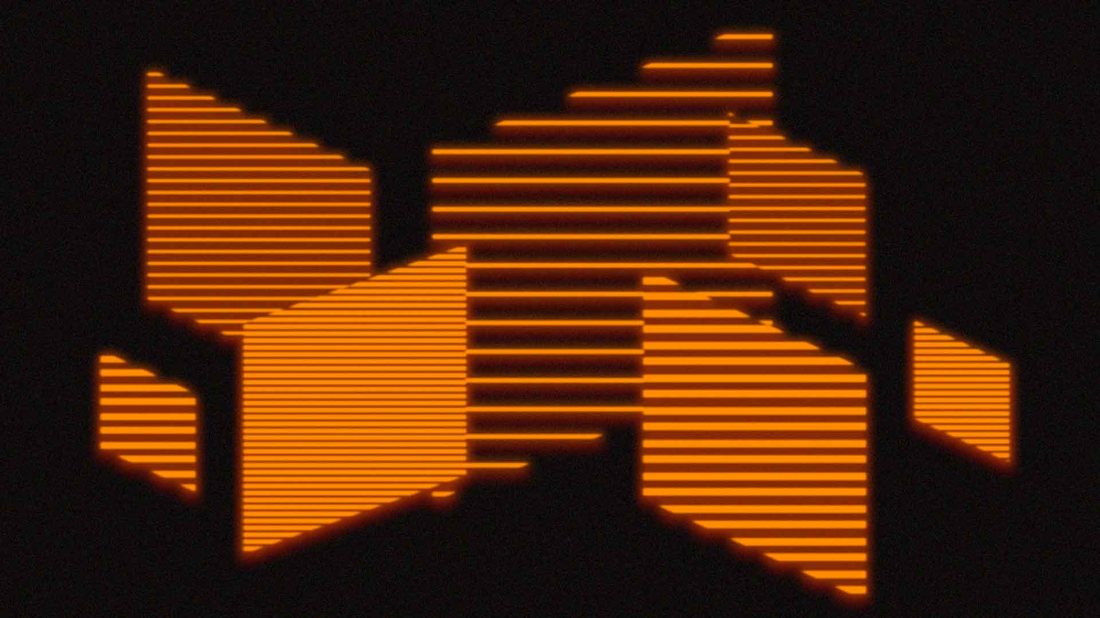
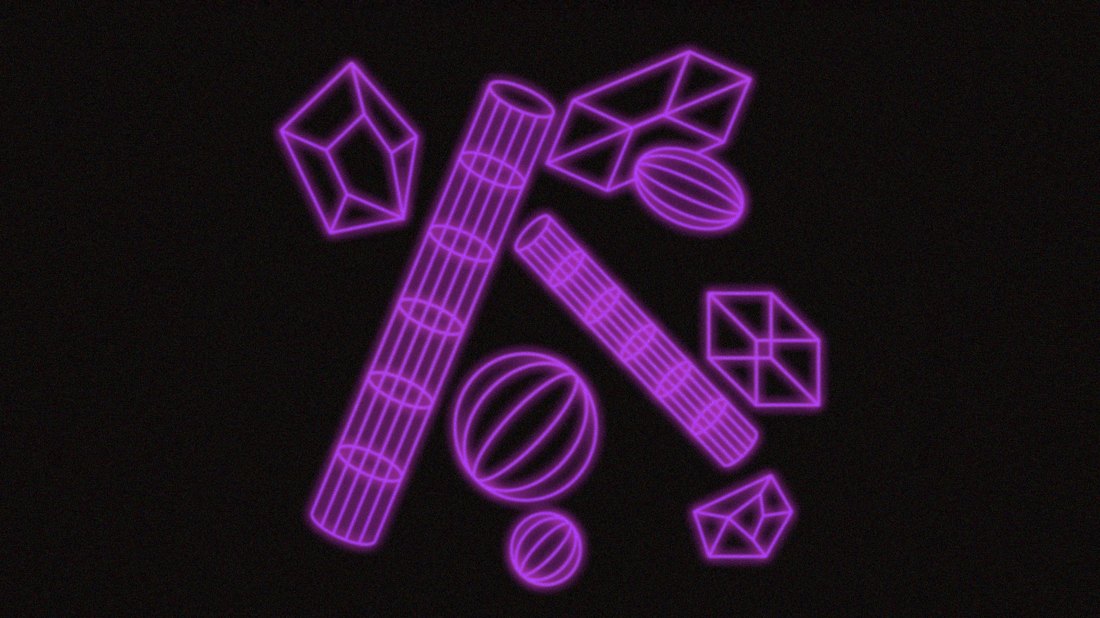
A library of 3D brand objects, each rendered with heavy film grain.
A 120-icon set with attitude — sweep brooms, snipers, skulls, and radiation are just some of the unique glyphs.
Everyone wanted the look
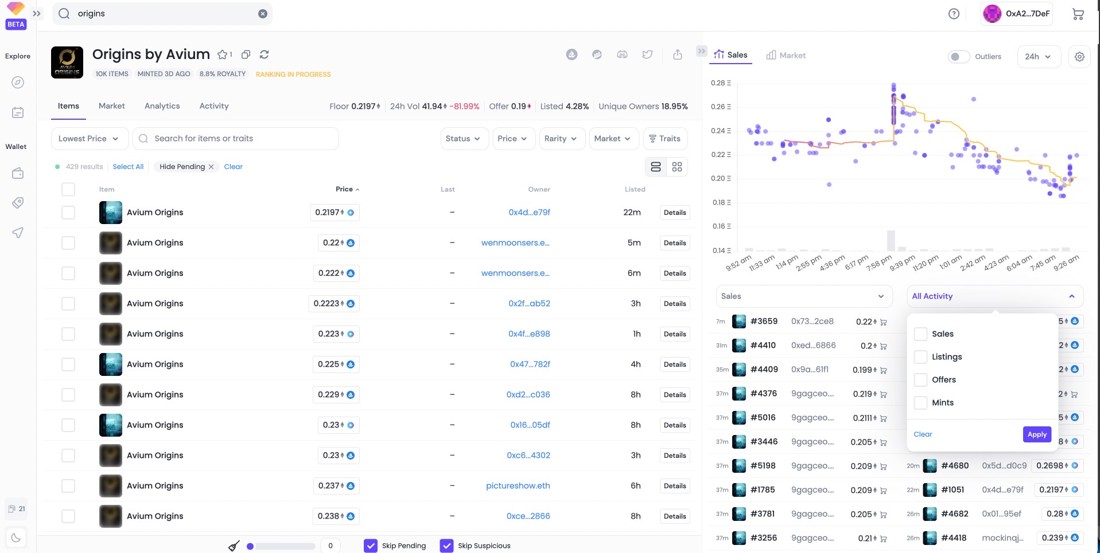
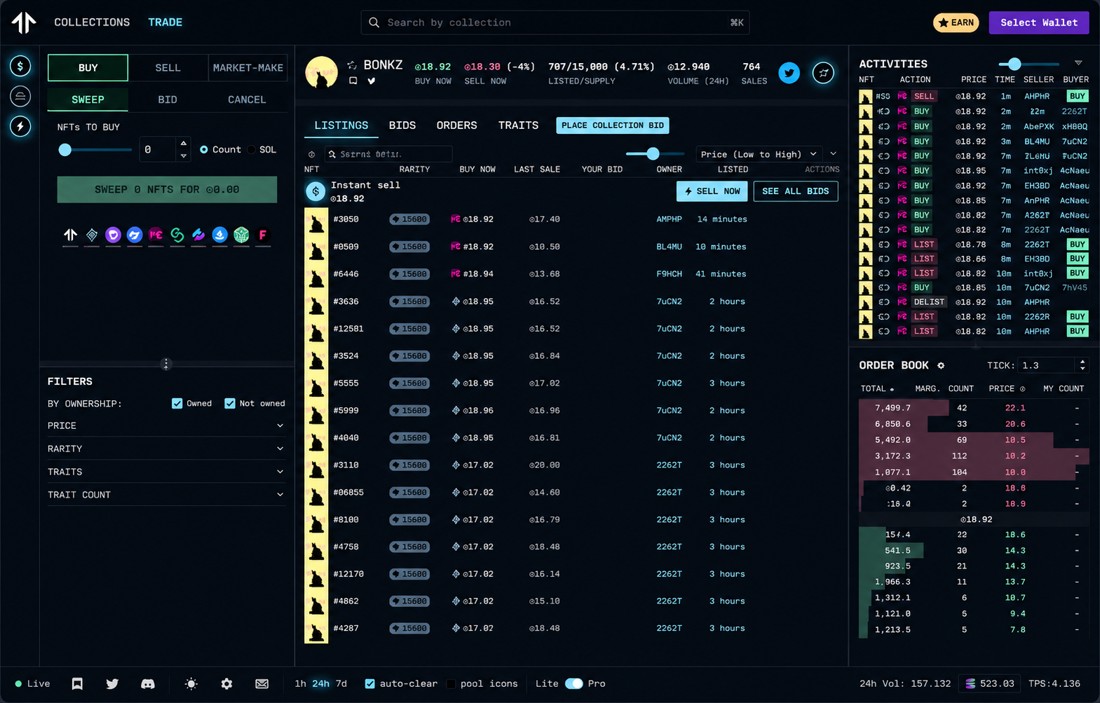
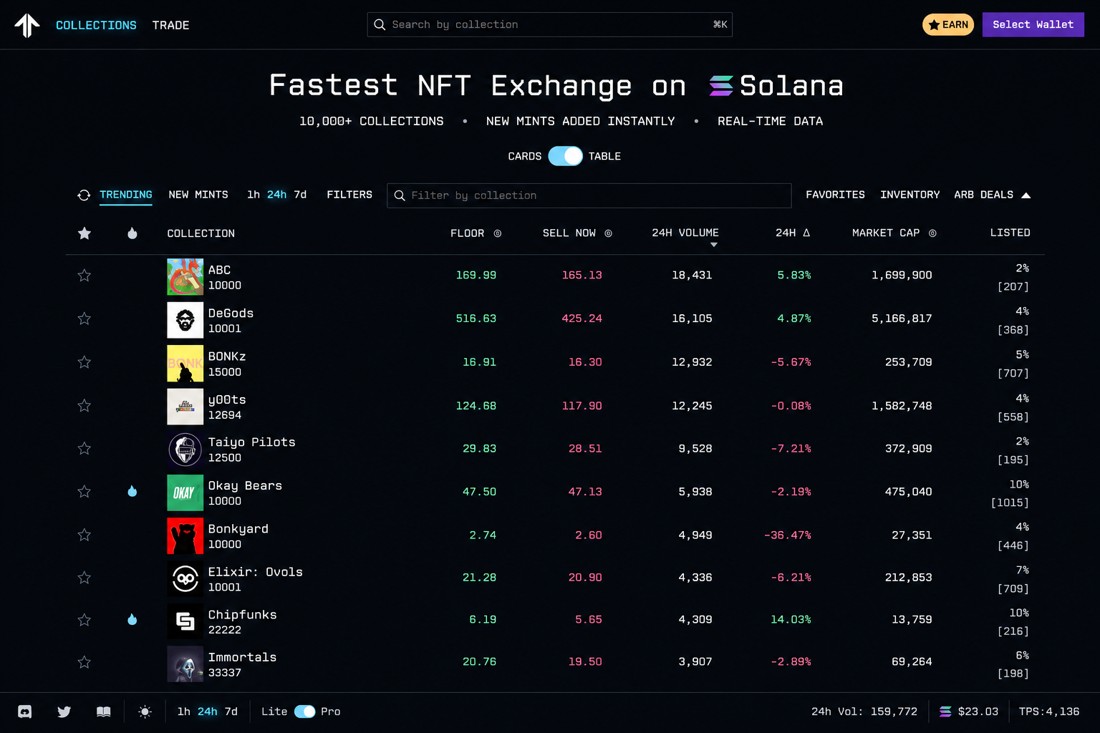
The clearest proof of a strong brand is how fast it gets copied. Within months, NFT marketplaces across Solana, Bitcoin, and beyond had cloned the formula Blur originated: dense data tables and trading-terminal aesthetics.
An airdrop with a sense of theater




Each package cracked open on a neon grid to reveal a $BLUR allocation by rarity.
Watch and listen to the full airdrop experience
The numbers backed it up
At its peak, Blur wasn’t competing for the NFT market — it was the market. The orange in every volume chart is Blur, taking the majority of trading volume across the ecosystem within months of launch.
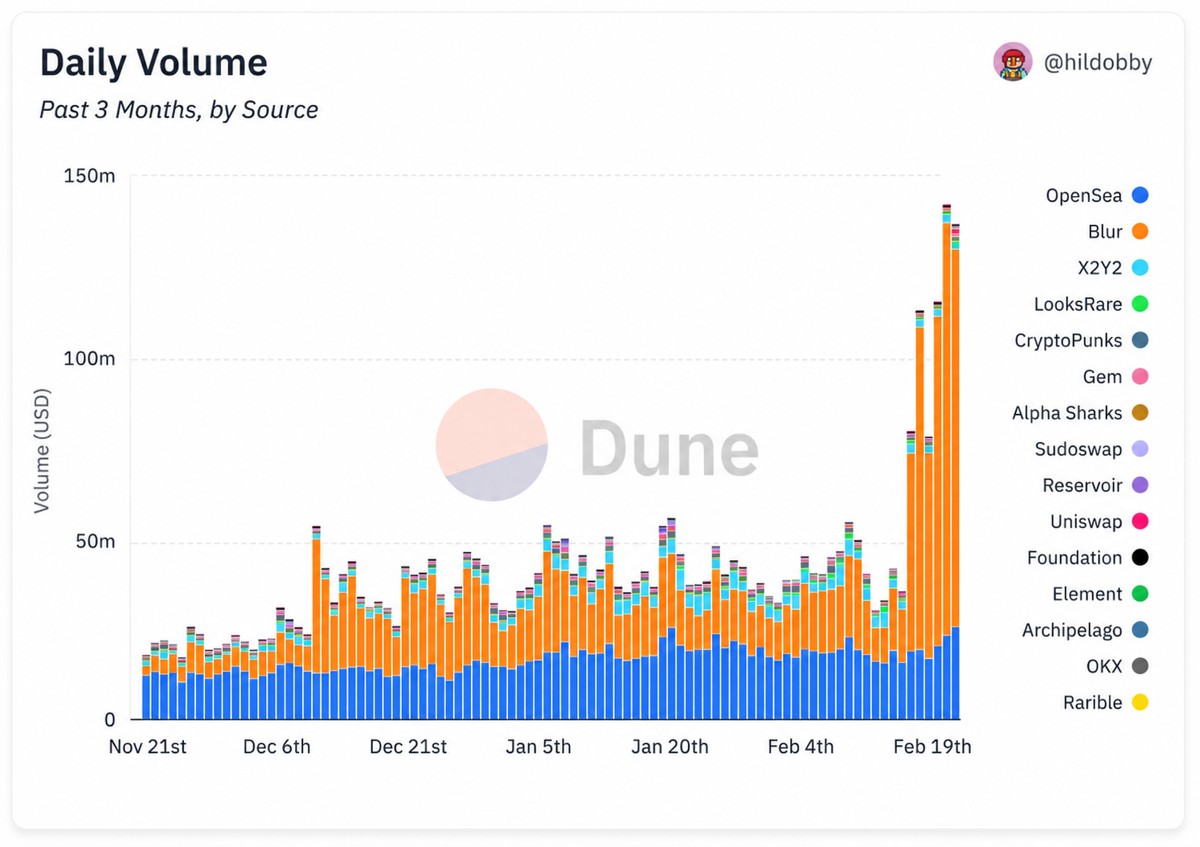
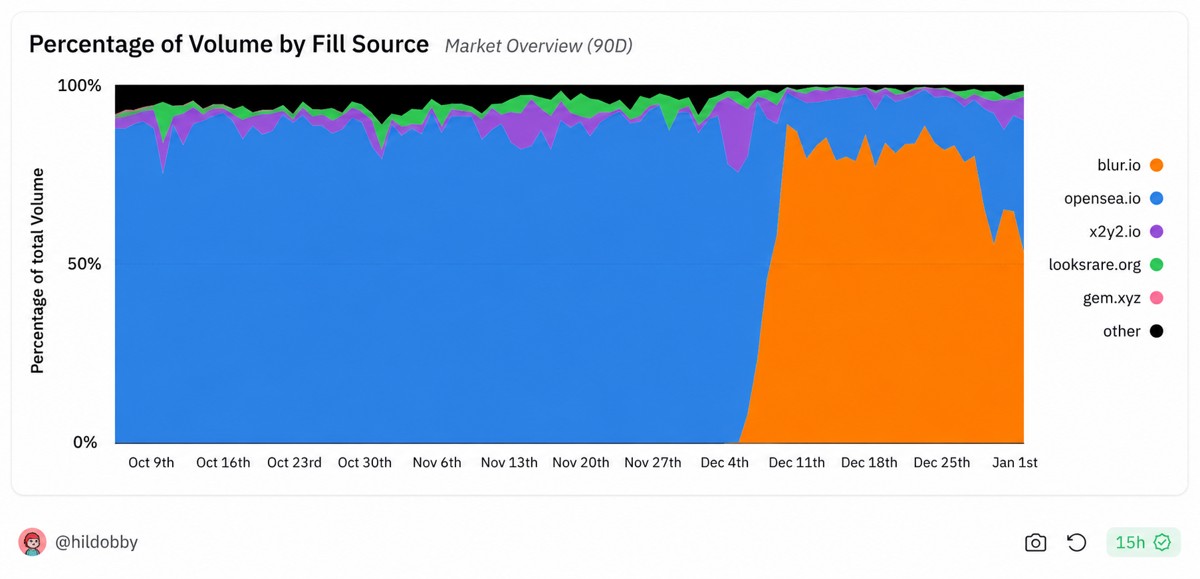
Share of volume by source
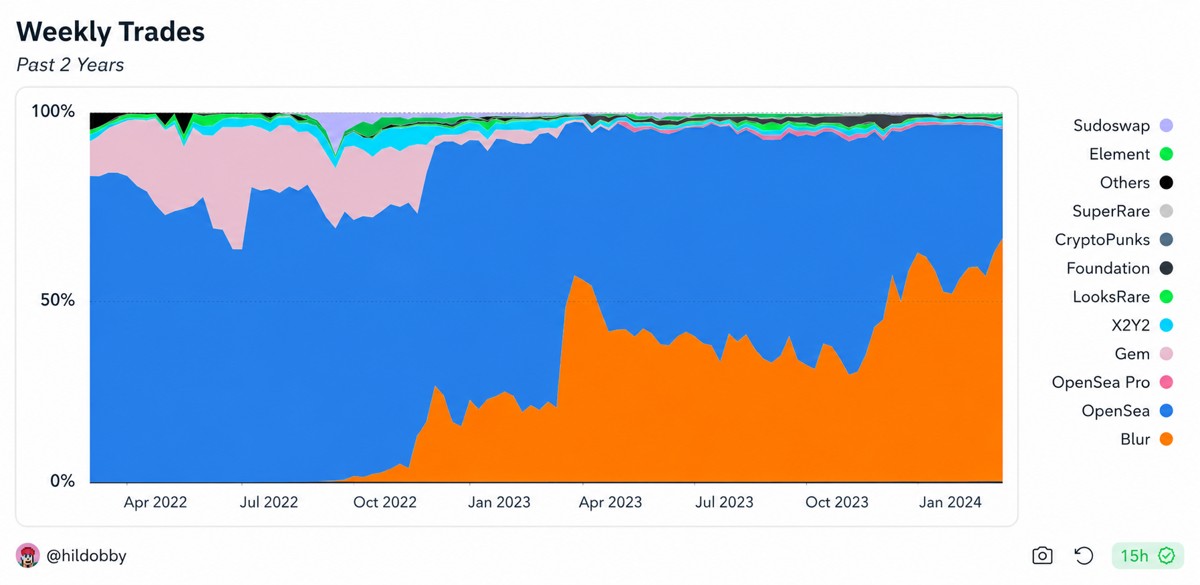
Weekly trades by source
The press took notice
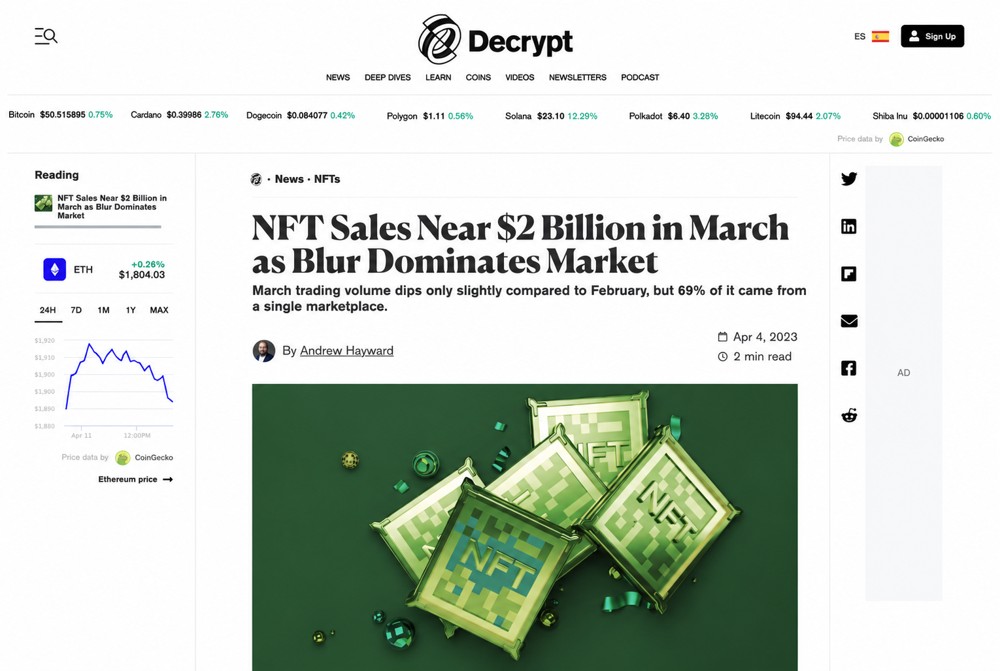
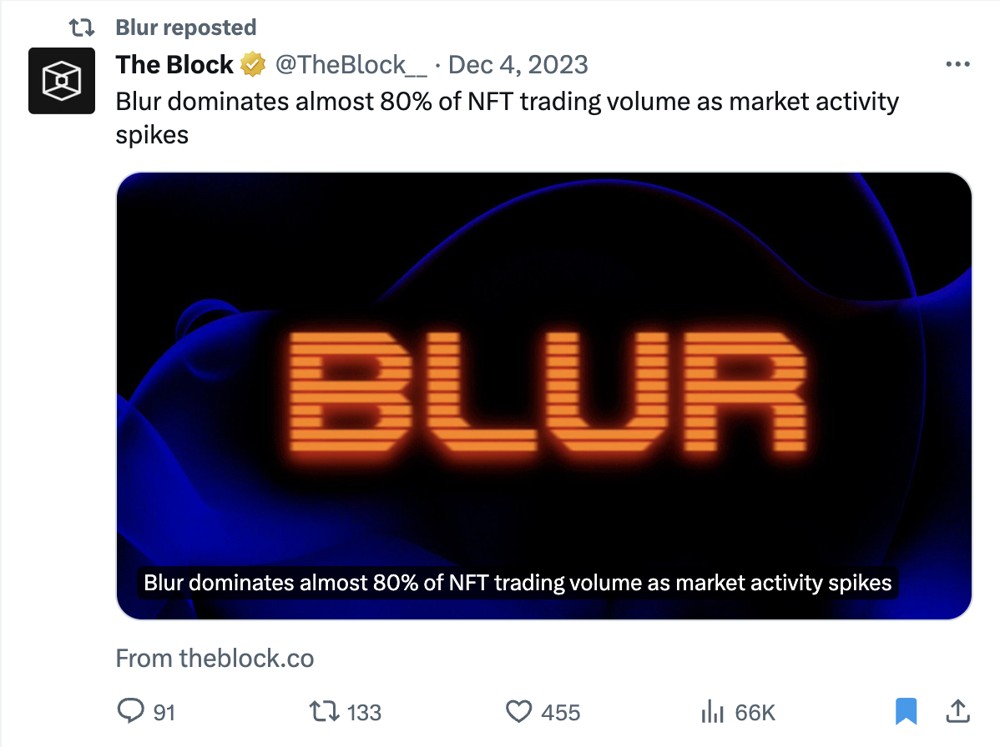
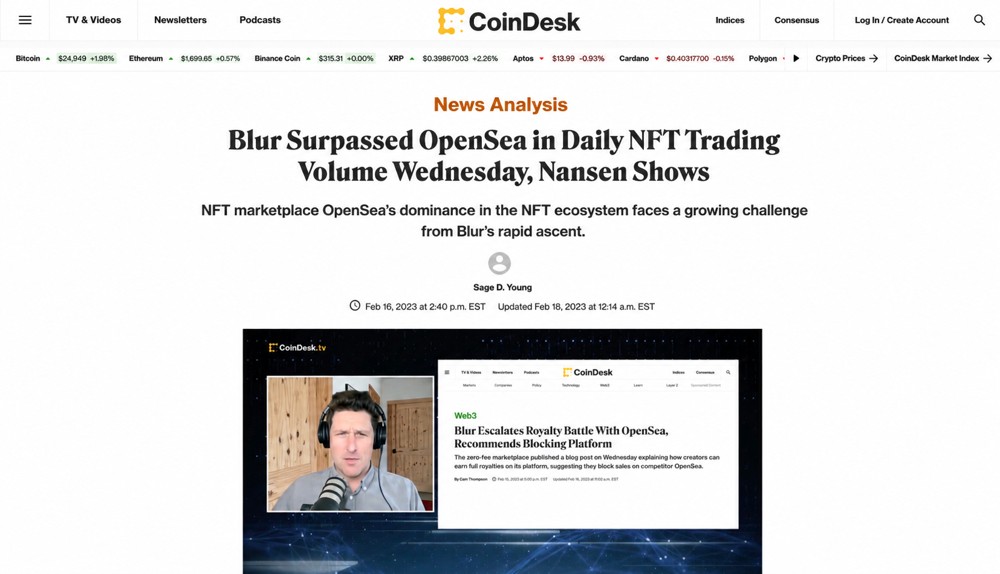
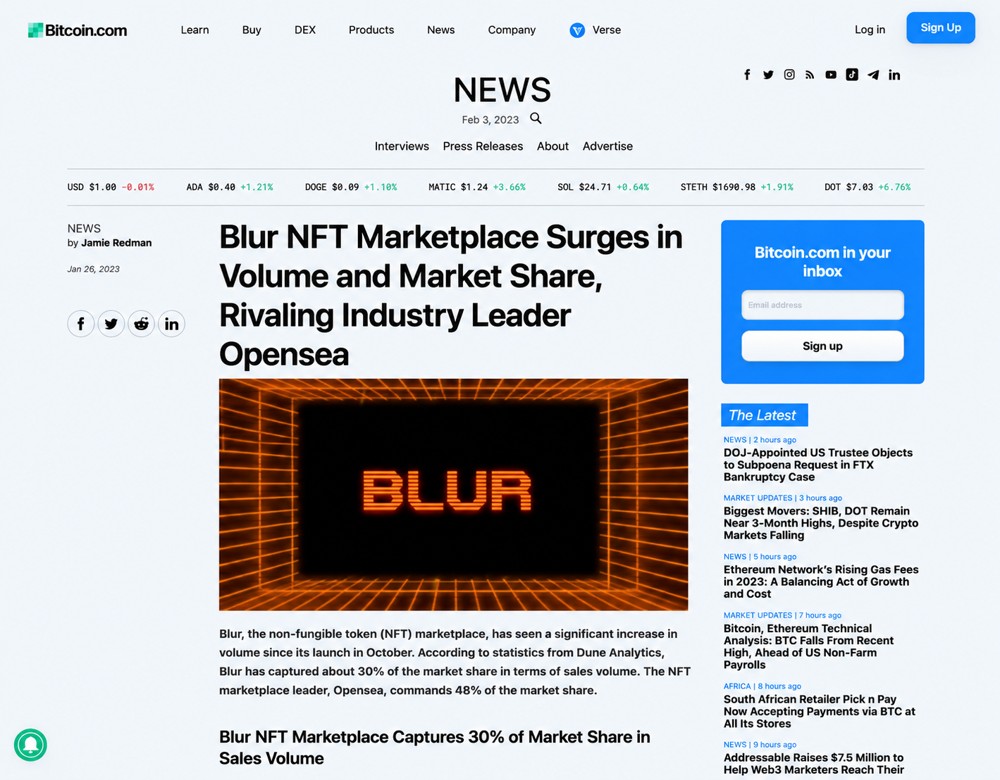
By early 2023, Blur had flipped OpenSea. CoinDesk, Decrypt, The Block, and Cointelegraph all ran the same story: a new marketplace commanding the bulk of NFT trading volume.
What traders said
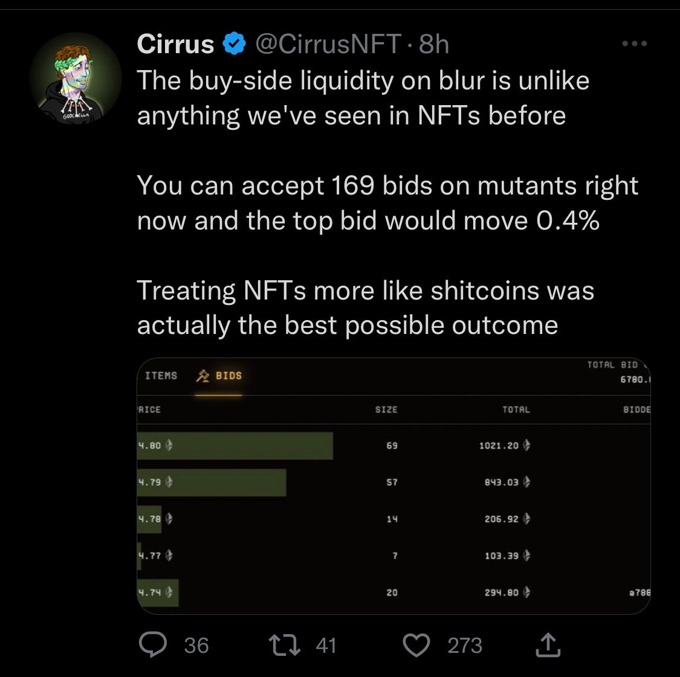
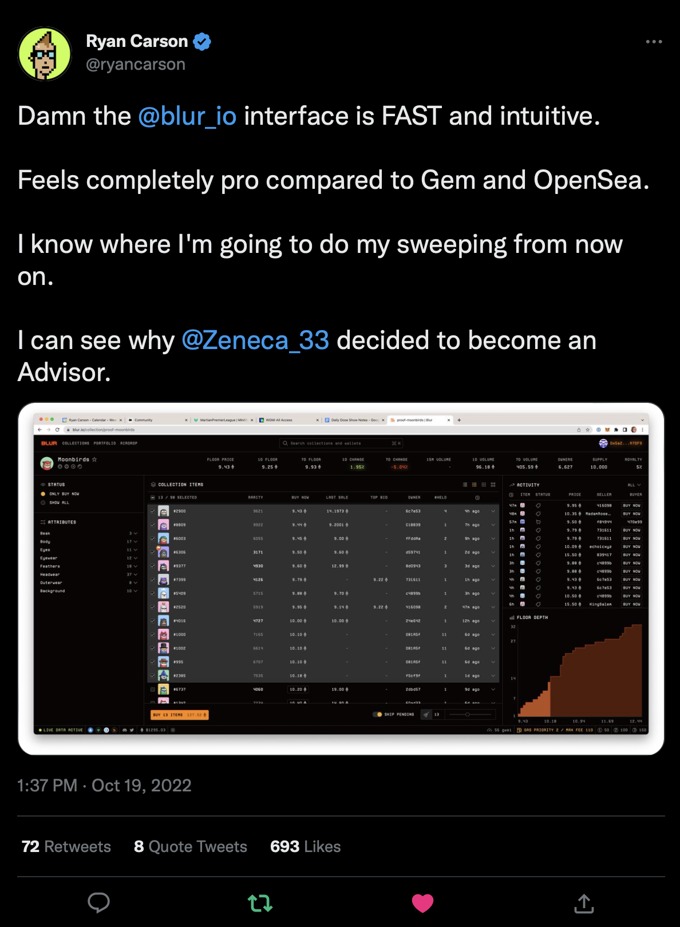
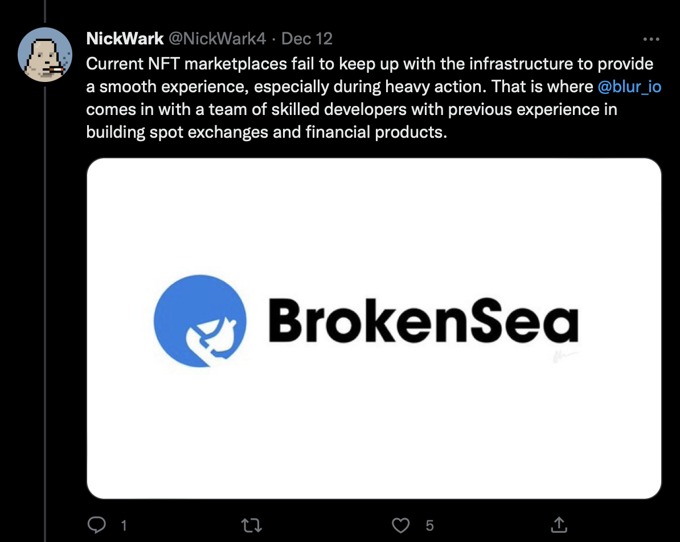
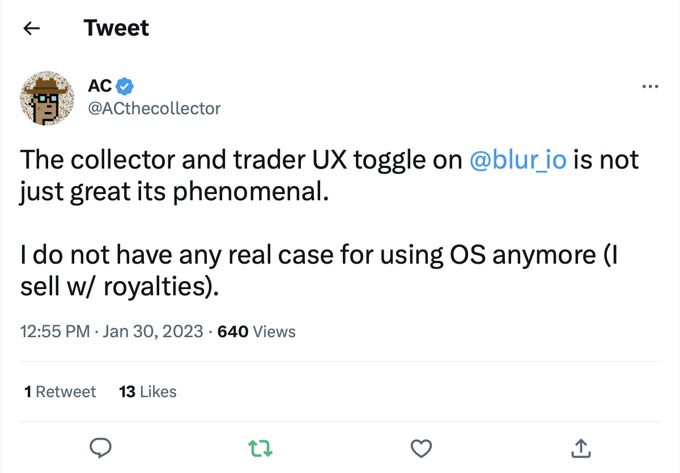
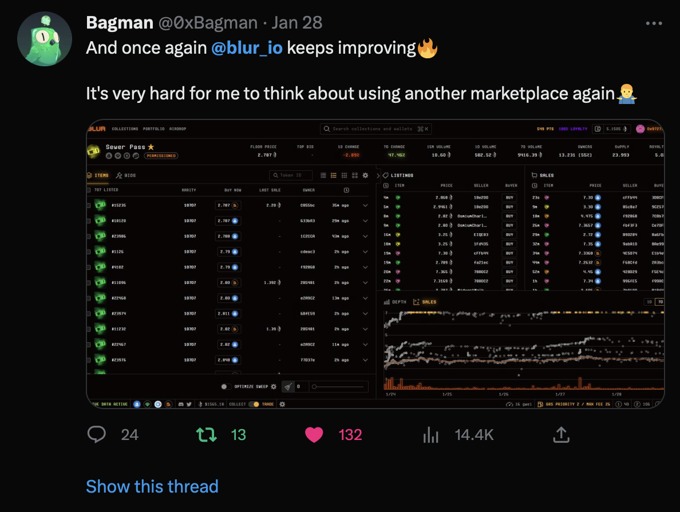
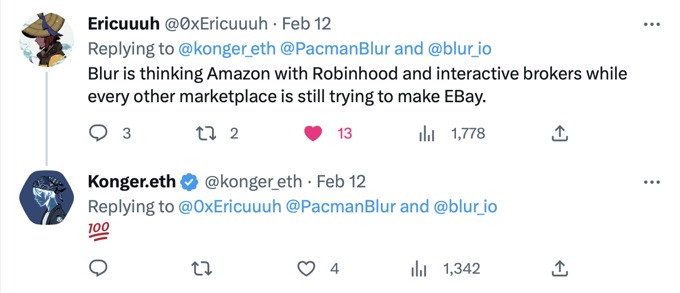
The community reaction was loud and immediate, and most of it came back to one thing: how the product felt to use.
Where it all started
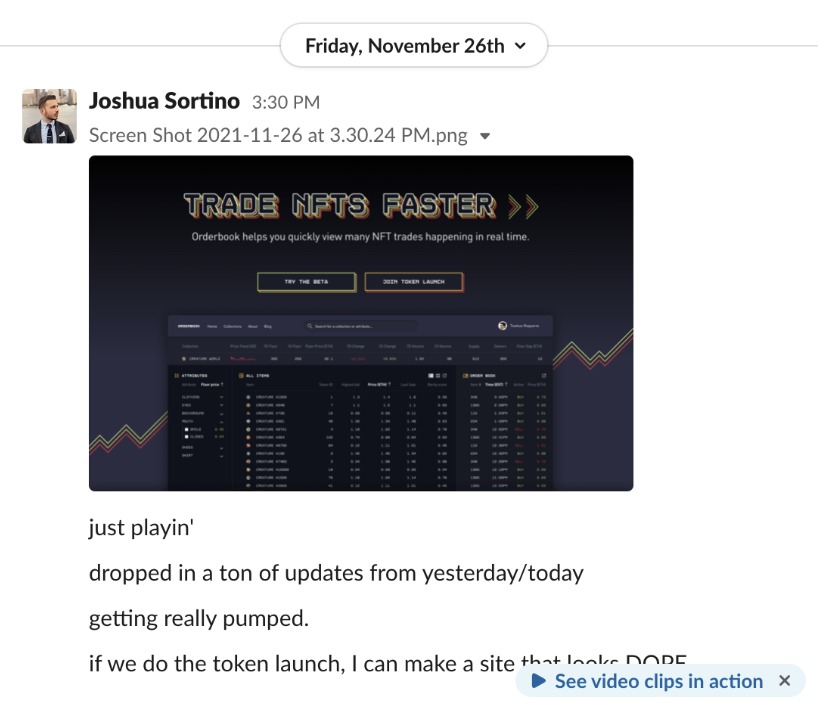
Blur began as a late-2021 side project for me. From day one of the company, I was excited to be a part of helping shape the entire industry’s direction.
Recap
Blur set out to build the fastest, most capable NFT marketplace. By talking to traders and understanding their needs, Blur took the volume and reset how the entire space looked. But the NFT market Blur was built for cooled. As speculative interest drained out of NFTs, even the best product in the category couldn’t manufacture demand the market had moved on from.
Takeaways
That is the lesson I carry from Blur: product quality wins your category, but the size and timing of the market you’re in is often the real driver of the outcome. You can design the best possible version of something and still be subject to the tide it sits on.


