I’m Joshua Sortino, a Miami + NYC-based Design Director, advisor, and investor. I will improve your startup’s user experience, design culture, and team. We should talk →

Put the phone on the table
and talk
Creator · Design and engineering · 2026 · On TestFlight
Nobody performs the conversation
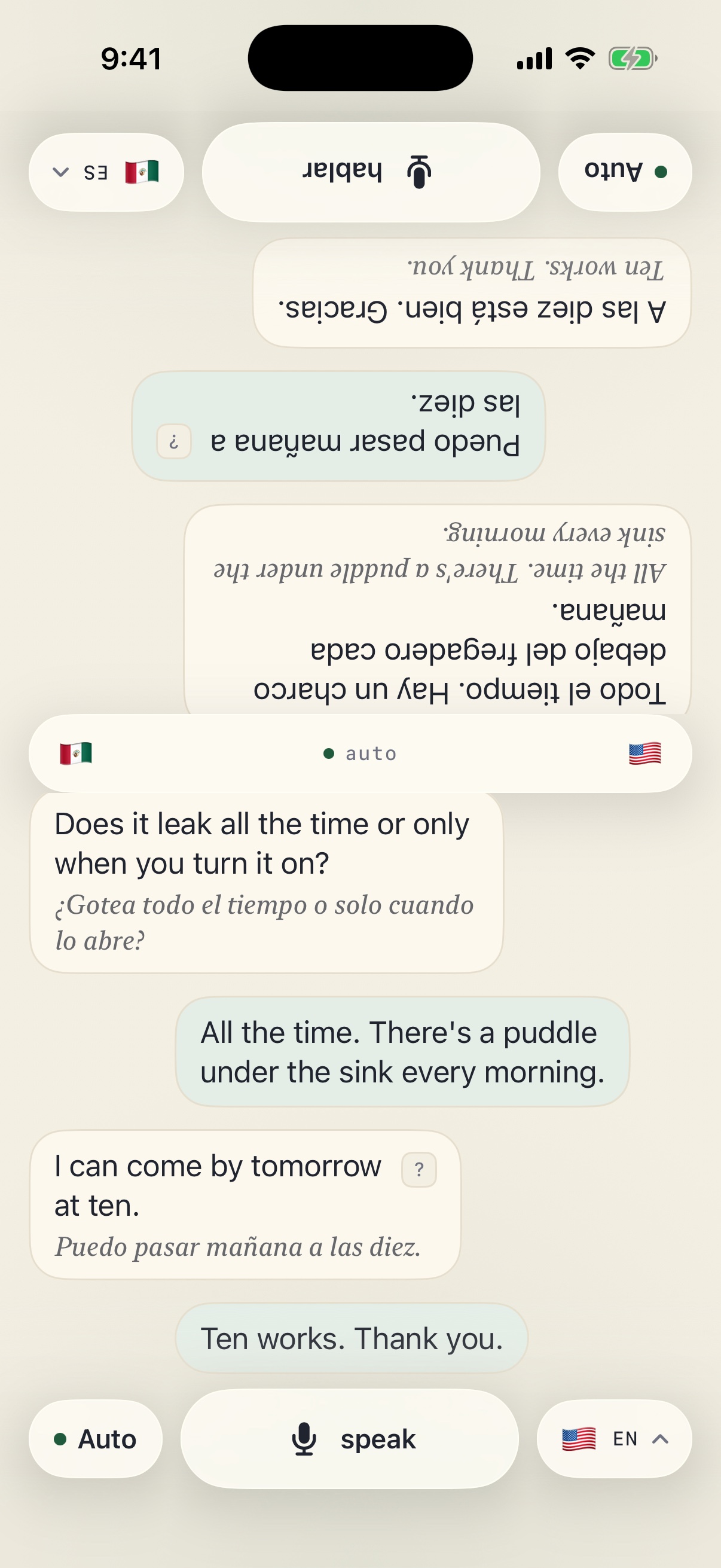
Translator apps solve the moment by taking it over: one phone passed back and forth, the machine speaking for everyone. Forte is built for the conversation itself. The phone lies flat between two people, the screen splits in two, and the far half turns to face the other person. They read every line in their own language, right side up, on their own side, chrome included: their capsule says hablar because for them the whole app is in Spanish. Then the two of you just talk.
Forte is a native iOS app and I am building it alone: the product, the brand, the interface, and the Swift underneath. The table above is the live TestFlight build.
Their side faces them
The far pane is rotated 180 degrees and set in its reader’s language, down to the controls. Nobody reads upside down and nobody waits for a turn.
The spine holds the table together
Both flags, the listening mode, and nothing else. Auto is the default: no buttons, no push to talk, the table simply listens.
The original rides along
Under every translated line, the words as they were said, set in serif italic. Trust in a translation comes from being able to see both.
The language decides the side
There is no your-turn button. Language identification, a lightweight voice print, and an optional tap-to-pin fuse into one attribution call per line, so even code switching lands where it should: okay, gracias in my voice files to me. When the table reads a line wrong, the bubble offers that was me and a swipe moves it across. A Speak button overrides Auto for loud rooms; let go and Auto comes back.
Underneath, transcription commits in waves, so sentence boundaries are labels decided after the fact rather than cuts made in the moment. A bubble can grow, split, or merge seconds after it appears, revised in place. That engine is a local Swift package with its own test suite, and it was built and green before the first screen was drawn.
A living phrasebook, not a chat app
The design language is paper and ink. A warm paper ground, the reader’s language in SF Pro, the other language’s original line in New York italic, like a specimen in a phrasebook, and stamps in SF Mono. Liquid Glass appears only where iOS means it, on the capsules, the spine, and the sheets, never on the words. The brand’s resting red steps aside at the table: the 2-Way mode carries a deep verdant, and an optional flag tint keys the accent to the language being spoken, in a colour from its flag, the pair chosen to be told apart.
Ready for a phone that folds in half
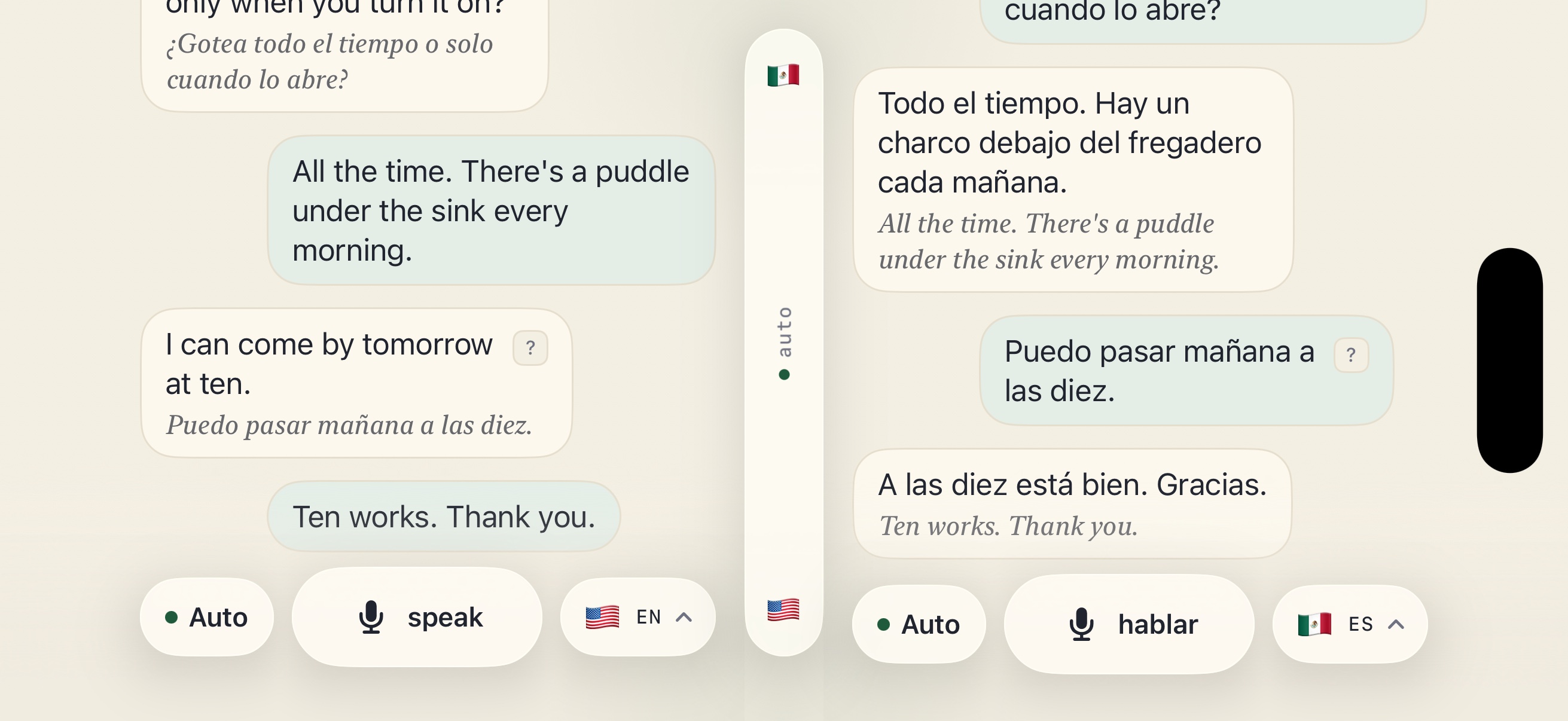
Apple’s iPhone Duo ships on October 23, and the table was designed for it before the hardware existed, from the published geometry and the simulator. Opened flat, the hinge becomes the spine, one person per panel. Folded into a tent, each person faces a landscape page whose top edge is the ridge, capsules down by the table where their hands are, nothing drawn under the fold. The fold itself arrives in iOS as a reserved region, and the layout model treats it as one more posture of the same table.
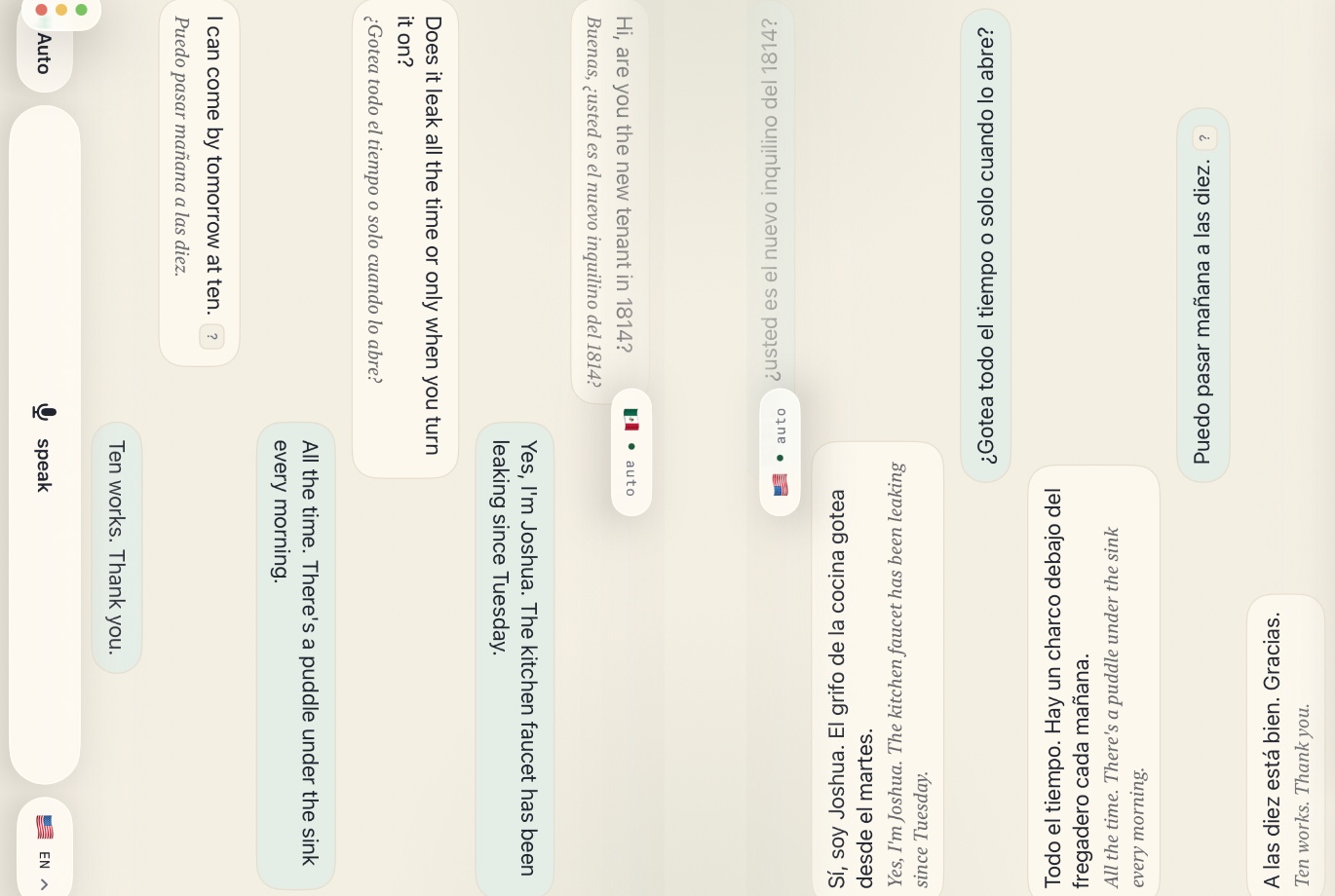
- Book opened flat between two people, the hinge as the spine.
- Tent stood up on the table, one landscape page per side.
- Propped the inner display faces you, the outer faces them. Gated on the hardware.
Nothing said at the table leaves the phone
Recognition is Apple’s SpeechAnalyzer, one long-lived lane per language, all fed from a single 16 kHz tap so every word lands on one shared timeline. Translation runs on the device. The voice print stays on the device. There is no account and no recording: the conversation lives in the room where it happened, and the settings sheet says exactly that.
The scaffold is designed to disappear
Forte began as a coach: it hears the person in front of you and hands you your next line to say out loud, with phonetics that fade as you improve. Piano to forte. The table is the first shipping movement of that idea, the one that needs no scaffold at all. The coach returns on the Duo’s propped posture, where the inner display faces the learner and the outer faces the other person, and later on the wrist. Every surface keeps the same thesis: the app removes itself from the sentence as your confidence catches up.
Takeaways
The product is a posture, not a screen. Once the phone lies flat between two people, every decision follows: the split, the rotation, the attribution, the quiet of the chrome. The hard part was never the translation. It was deciding, line by line, who said what, and staying out of the way while being confident enough to commit. So everything is built to be wrong and recover: bubbles revise in place, a correction is one swipe, and the machine never speaks for anyone.


